Maison du Lac Évian-les-Bains
Cart
EN
FrançaisEnglishEspañolDeutschItalianoNederlandsالعربية简体中文Polski日本語Português (Portugal)한국어SvenskaБългарскиΕλληνικάDansk
Menu
← Back to the Herbarium

Aromatic

Wild angelica

Angelica sylvestris
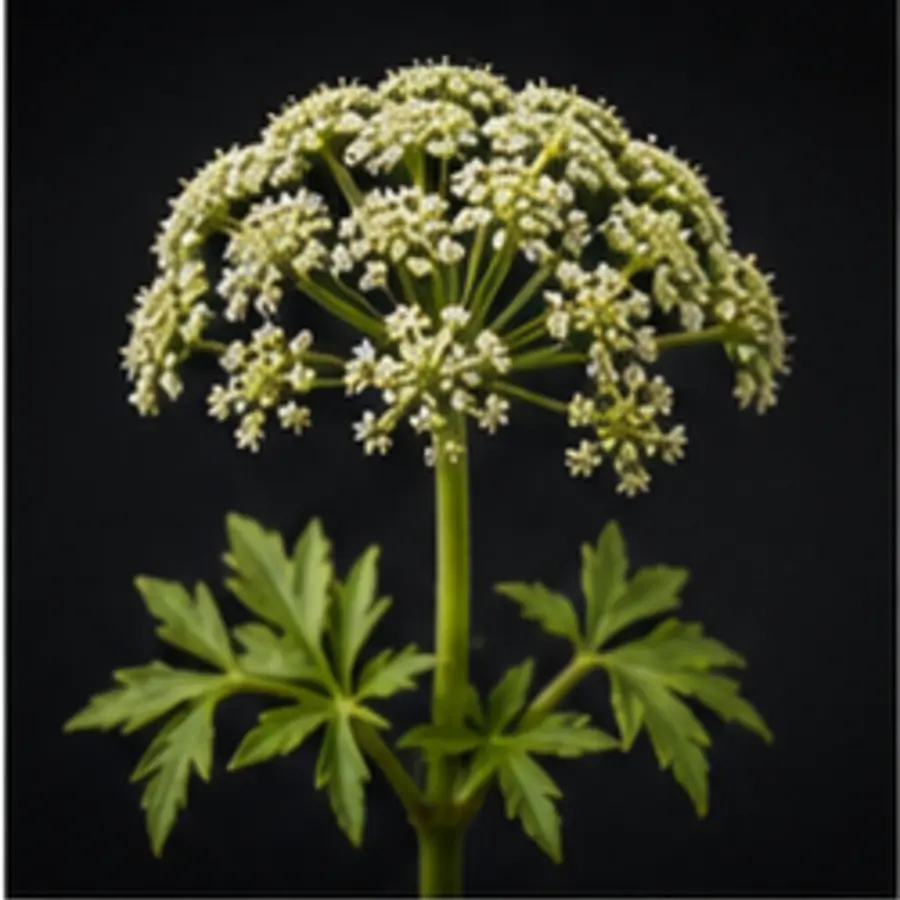
Large pale umbels above damp grasses: wild angelica embodies the expansive freshness of woodland edges. Its fragrant interpretation combines green stems, light petals and a hint of vegetal shade.
Wild angelica
01 · Botanical inspiration

Origins & territories

France · Austria · Switzerland · Italy · Slovenia

Angelica sylvestris

Angelica sylvestris belongs to the Apiaceae and grows in cool woodland, damp meadows and along streams. Its large divided leaves and domed umbels of small white to pinkish flowers give it a tall silhouette, very different from cushion-forming alpine flowers.

FranceAustriaSwitzerlandItalySlovenia
Alps · indicative area
02

Flowering & plant cycle

Flowering generally extends from July to September in the Swiss reference calendar. The domed umbels unfold above damp vegetation, then bear flattened fruits. The atlas follows this cycle as an inspiration drawn from tall herbs, flowers and woodland edges.

Flowering · botanical reference · Switzerland

  1. Jan
  2. Feb
  3. Mar
  4. Apr
  5. May
  6. Jun
  7. Jul · Indicative period
  8. Aug · Indicative period
  9. Sep · Indicative period
  10. Oct
  11. Nov
  12. Dec

Periods vary with region, altitude and yearly conditions.

03

Interpretation and composition

This sheet evokes the living plant through an accord of stem, leaf and light flower. Angelica root oil, from Angelica archangelica, constitutes a distinct perfumery material, with its own botanical identity and process.

04

In a composition

Juicy green notes, transparent floral character and fresh wood suggest tall-herb communities and woodland edges. A small earthy facet adds depth without obscuring the brightness of the umbels.

05

History & uses

In the Apiaceae, the umbel distributes numerous small flowers at the end of rays. The wild angelica offers a spectacular reading: the large apparent bouquet is a collective architecture of tiny flowers.