← Back to the Herbarium
Copaiba balsam
Copaifera officinalisCopaiba develops a supple, balsamic woodiness, sometimes reminiscent of smoked tea. Its discreet warmth connects the heart of a composition to the base.
Brazil
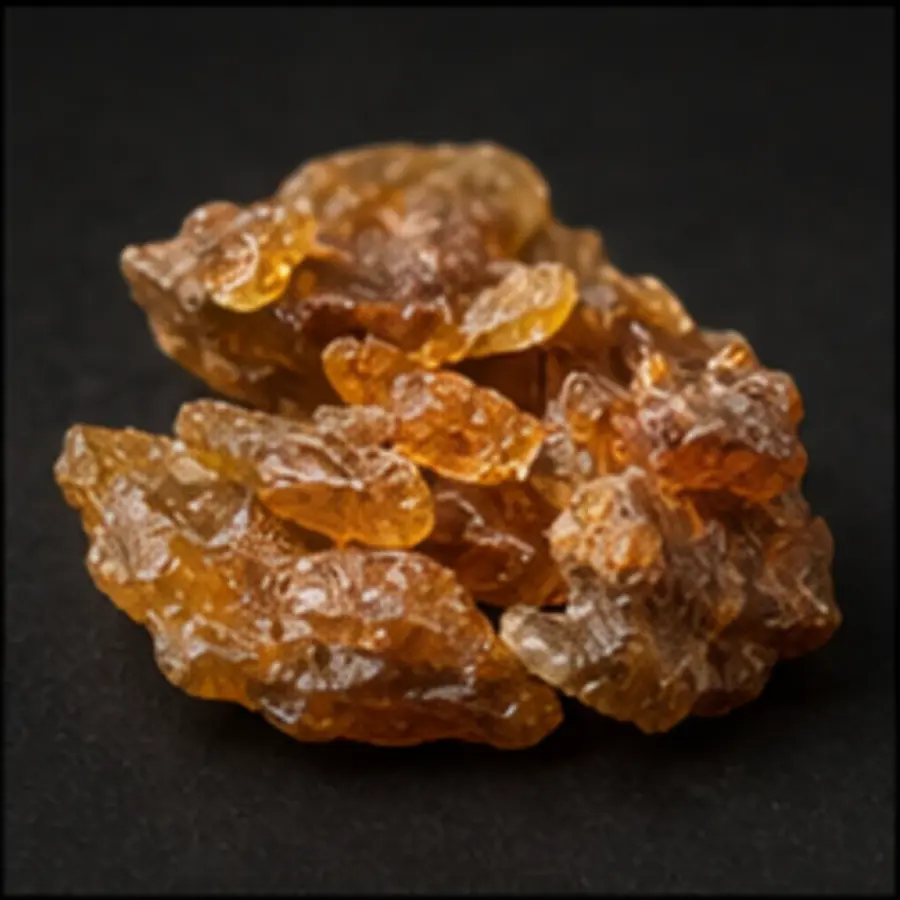
Copaifera officinalisPerfumery supply chains work with Copaifera trees, including Copaifera officinalis. Brazil is a reference origin. The raw material is an oleoresin, called balsam, held within the wood rather than extracted from leaves.
Recovering balsam requires work on selected trunks. One Brazilian reference season runs from January to June. Gathered material is prepared for distillation, with differences between species, origins and lots.
Periods vary with region, altitude and yearly conditions.
Hydrodistillation produces an essential oil. Fractional distillation can then select a heart, highlighting woody and balsamic nuances. Compounds such as beta-caryophyllene contribute to its identity.
One copaiba-heart quality requires about 3 kg of balsam for 1 kg of fractionated oil. The reference concerns balsam prepared for this extraction.
It accompanies sandalwood notes, musks and dry woods. A smoked-tea nuance can meet pale leather or dried-leaf accords. With citrus, it creates a soft transition towards the base without a dominant sweet signature.
This material offers another way to work with a tree: the perfumer seeks balsam rather than wood chips. Fractionation then gives a particular reading of the exudate, between woody softness and gently smoky warmth.