← Back to the Herbarium
Peru balsam
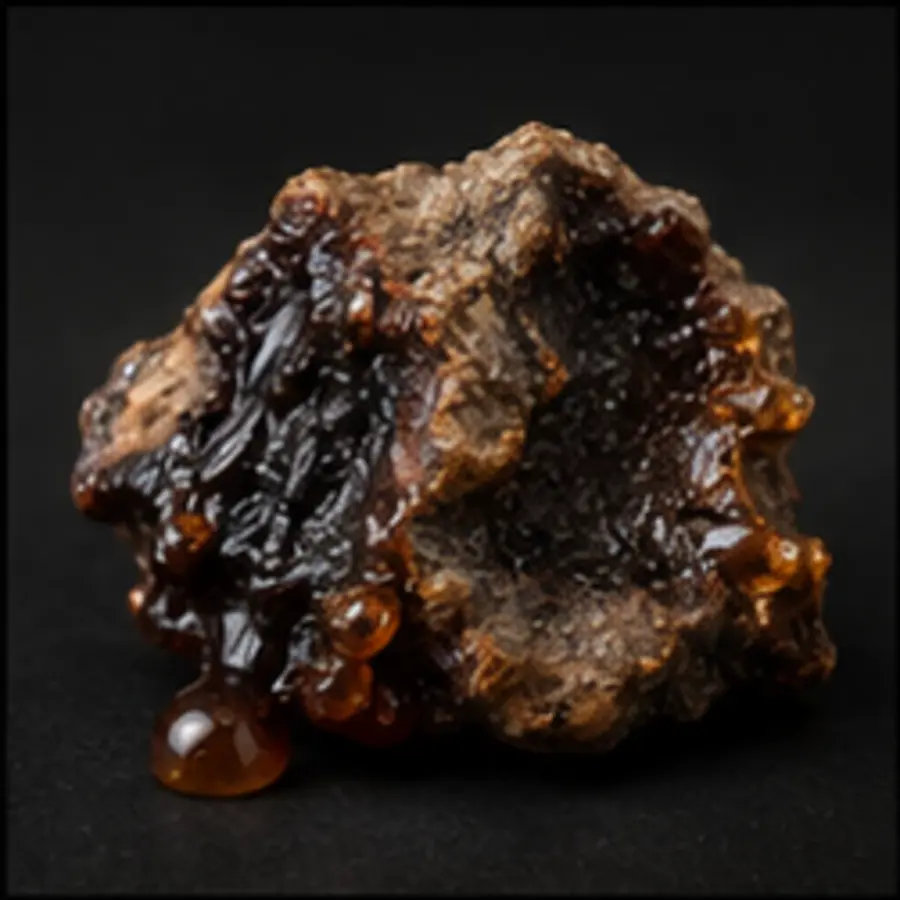
Myroxylon balsamum var. pereiraeVanilla, cinnamon and resinous warmth: Peru balsam gives perfume a generous, soft and enveloping base. Behind its name lies a craft emblematic of El Salvador.
El Salvador
Myroxylon balsamum var. pereiraeThe material comes from Myroxylon balsamum var. pereirae, a tropical Fabaceae tree. El Salvador is a major production origin, notably the uplands west of San Salvador. Perfumery processes the balsam collected from the tree.
Traditional collection follows the rains, starting in November–December and continuing into spring. Balsameros wound and heat selected bark areas; cloths absorb the exudate. Processing these cloths recovers balsam for purification.
Periods vary with region, altitude and yearly conditions.
Several extracts can be made from the balsam. Molecular distillation selects a perfumery quality with vanilla, amber and balsamic facets. This stage works on material already collected, rather than extracting exudate from the tree.
One molecularly distilled quality uses about 2.5 kg of balsam for 1 kg of product. Balsam collected per tree is a separate measure, depending on age and harvesting practice.
It softens amber accords, woods and leathers. Rose gains depth, while spices acquire a gentle lasting warmth. Citrus can illuminate its generous base and prevent an overly compact impression.
Production depends on balsameros’ skills and trees worked over successive years. Certified supply chains now structure collection and traceability. The balsam’s portrait also tells the story of a locally transmitted forest craft.