← Back to the Herbarium
Bergamot
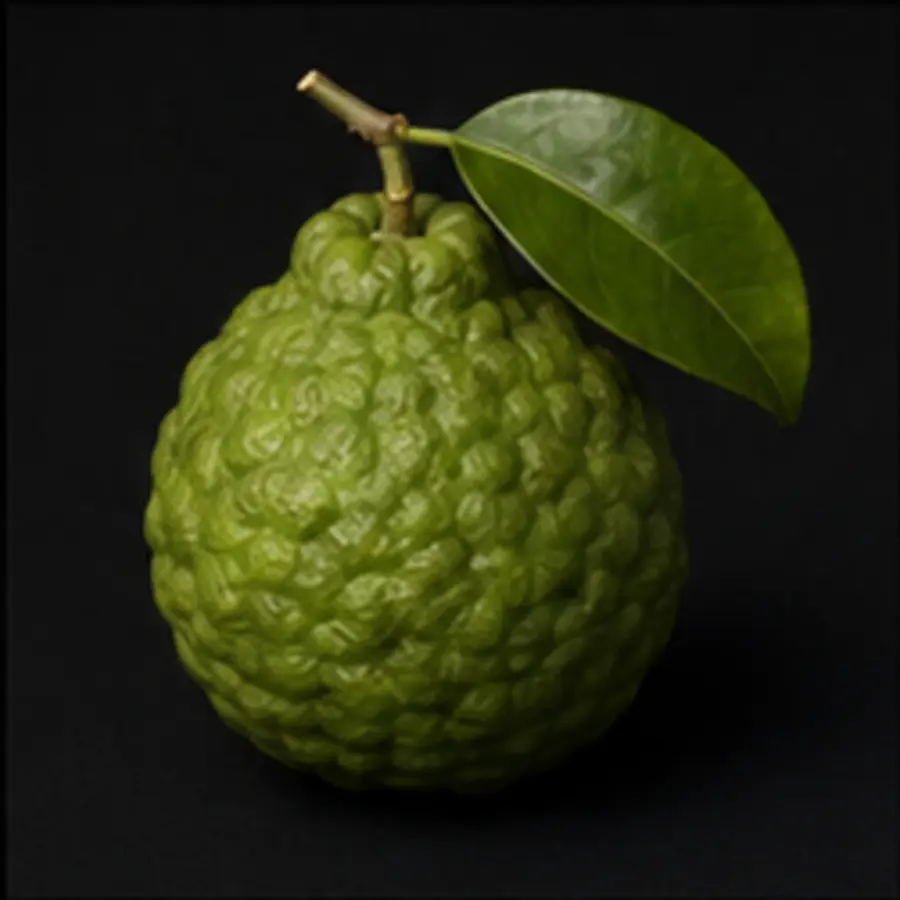
Citrus bergamiaBergamot is a citrus of contrasts: bright and zesty, yet floral and delicately aromatic. Its oil brings a suppleness to freshness that lemon expresses differently.
Italy
Citrus bergamiaCitrus bergamia is closely associated with Calabria in southern Italy, particularly its Ionian coast. The fragrant material lies in oil pockets in the fruit peel. Juice, leaves and zest do not represent the same palette.
Fruits are harvested at a stage selected for aromatic quality. One Calabrian supply chain selects still-green fruit and lists December–February. Maturity affects the profile: one grade’s calendar does not describe every local practice.
Periods vary with region, altitude and yearly conditions.
Cold expression mechanically releases oil from the peel, followed by phase separation. Some grades undergo molecular distillation to reduce furocoumarins. These treatments produce oils designated FCR or FCF according to supplier specifications.
One expressed and subsequently treated Calabrian grade reports approximately 200 kg of plant material per kilogram of oil: 20 kg for 100 g.
Bergamot illuminates Cologne, opens rose accords and gives woods or ambers momentum. Linalool and linalyl acetate contribute its floral dimension. Its value lies in linking zest with flowers, making the transition towards the heart particularly fluid.
Bergamot also gives Earl Grey teas their signature fragrance. Its oil meets tea leaves and their woody, floral or tannic nuances. This familiar pairing reveals its dual presence: citrus freshness and an almost floral softness.