← Back to the Herbarium
Atlas cedarwood
Cedrus atlanticaAtlas cedarwood reveals a warm, full-bodied wood with a subtle leathery edge. Its oil comes from the wood of Cedrus atlantica rather than the conifer’s needles.
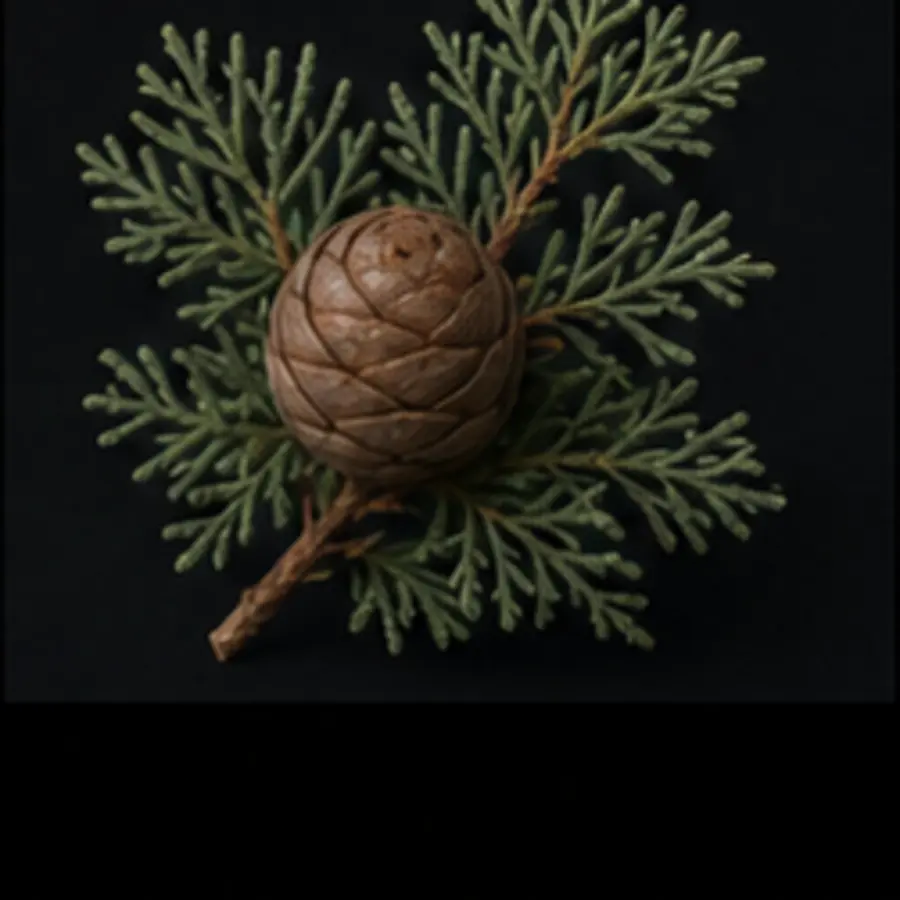
Morocco
Cedrus atlanticaThe mountains of Morocco are a major origin. Cedrus atlantica belongs to the Pinaceae: it is a true cedar, whereas Virginia “cedarwood” is a juniper. This botanical distinction accounts for different scent signatures beneath a shared commercial name.
The wood is cut and reduced to fragments suitable for the still. Woodworking by-products may enter distillation supply chains, and their provenance needs to be traced within each chain. This storable material allows oil production to be spread throughout the year; year-round availability does not imply a flowering-linked harvest or one universal cutting season.
Hydrodistillation carries the wood’s volatile compounds into the condensate, where oil is separated from water. Himachalenes contribute to its identity. Wood preparation and distillation conditions influence the result alongside geographical origin.
One Moroccan hydrodistilled grade reports about 30 kg of wood per kilogram of oil, or 3 kg for 100 g.
It builds an enveloping woody base with creamy roundness, amber-resin accents and a slight leather impression. With vetiver it deepens the structure; with citrus it extends freshness into dry warmth. Its presence remains after the most volatile notes have faded.
The cedarwood vocabulary includes several trees valued for fragrant timber. Comparing Atlas and Virginia shows why a “cedarwood” label alone cannot describe a material: species and distilled plant part are decisive.