← Back to the Herbarium
Aromatic
Indian davana
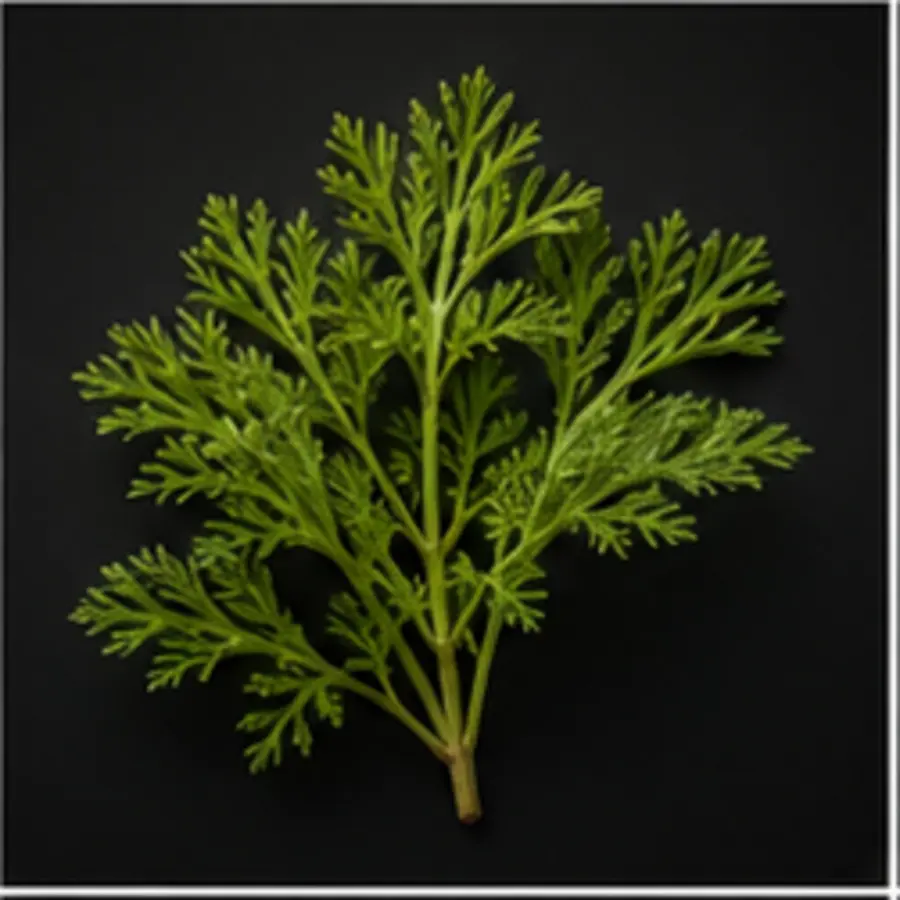
Artemisia pallensDavana takes an aromatic herb towards an impression of candied fruit and liqueur. Its warm scent, shaded with apricot and hay, has an almost velvety suppleness.
Aromatic
India
Artemisia pallensArtemisia pallens is an artemisia grown in India, notably in Karnataka. It belongs to the Asteraceae family. The aromatic aerial parts, leaves and flowers, are used for distillation. Its fruity signature differs markedly from the bitter freshness often associated with artemisia.
February and March are reference crop months for the oil. The flowering stage influences the quality of the harvest, as does the weather during this period. The aerial parts are cut and prepared for distillation; despite the extract’s fruity scent, the crop is an herb rather than a fruit.
Periods vary with region, altitude and yearly conditions.
Hydrodistillation produces the essential oil. Steam carries over the fragrant compounds, and cooling allows the oil to be recovered. Davanone is one of the characteristic constituents; the overall profile also includes aromatic, floral and gently spicy nuances.
One quality of davana oil is listed at about 1,100 kg of plant material for 1 kg of essential oil. The figure describes a production quality; cutting stage and preparation contribute to differences between lots.
Davana gives movement to apricot, plum and dried-fruit accords. It accompanies deep roses, amber woods and soft leather compositions. A touch can suggest a liqueur; a more airy pairing with citrus can instead illuminate its green, herbal side.
This essence illustrates a gap between botanical origin and olfactory image: an herb can suggest ripe fruit. Its creative appeal comes from that ambiguity, making it possible to build fruity accords with a plant-like texture and a warmth more varied than a simple sweet effect.