← Back to the Herbarium
Frankincense
Boswellia sacraFrankincense, or olibanum, is a Boswellia resin. Distillation reveals lemony, peppery freshness that can surprise anyone familiar only with its smell on embers.
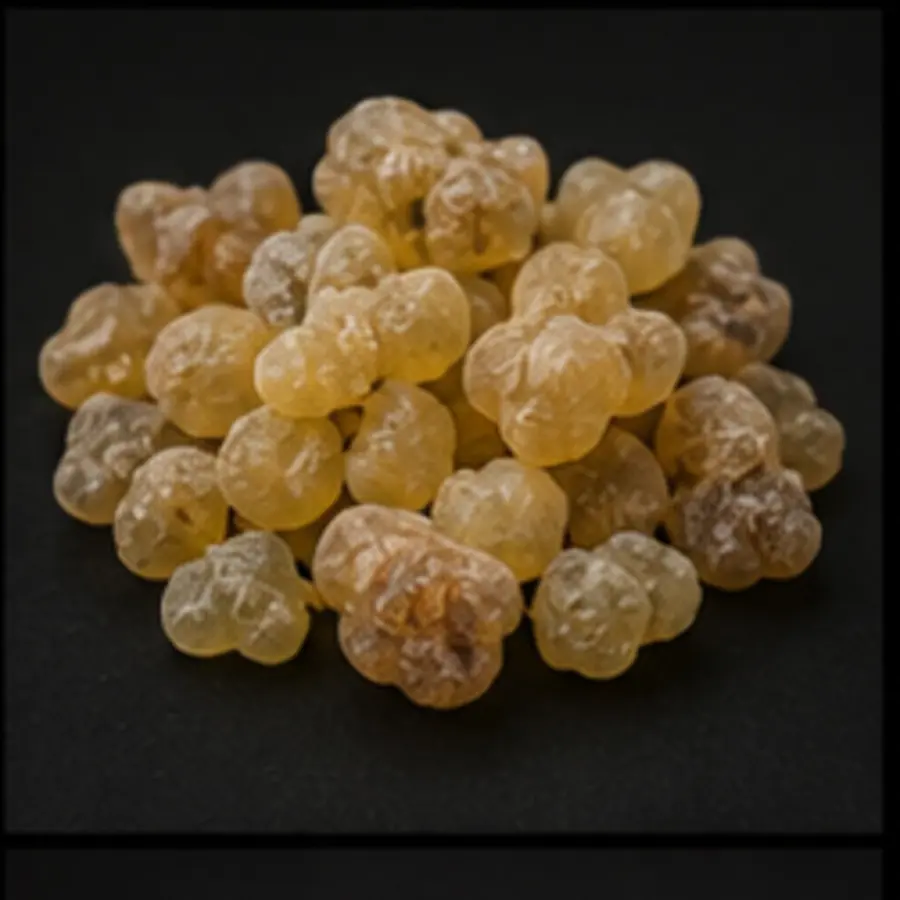
Somalia · Oman
Boswellia sacraBoswellia sacra is associated with Dhofar in southern Oman, notably Wadi Dawkah. Horn of Africa supply chains also provide olibanums, sometimes commercially designated Boswellia carterii. Botanical and trade names must be read alongside origin.
Resin exudes on the trunk and hardens into tears, which are collected and sorted. Timing depends on species, site and local seasons. One Somaliland oil sold as Boswellia carterii lists October–February; this window must not be presented as Dhofar’s calendar.
Hydrodistilling the tears produces a fresh, terpenic essential oil. Resin extraction yields denser resinoids. Burning creates another scent experience again: embers transform the material, whereas distillation selects a volatile fraction.
One Somaliland oil sold as Boswellia carterii reports approximately 20 kg of gum-resin per kilogram of oil, or 2 kg for 100 g.
Frankincense opens a mineral, resinous space between citrus and woods. It can illuminate rose, give cedarwood tension or let amber breathe. Its character extends beyond smoke: some oils initially feel bright and almost zesty.
Oman’s “Land of Frankincense” sites record trading routes connecting Dhofar’s trees with ports and caravans. This resin was a major luxury commodity in Antiquity, long before its use in contemporary perfumery.