Maison du Lac Évian-les-Bains
Cart
EN
FrançaisEnglishEspañolDeutschItalianoNederlandsالعربية简体中文Polski日本語Português (Portugal)한국어SvenskaБългарскиΕλληνικάDansk
Menu
← Back to the Herbarium

High-altitude Norway spruce

Picea abies
The sharp freshness of needles, a woody shadow and a flash of resin: high-altitude Norway spruce expresses a vibrant forest. Its accord can retain the clarity of the twig while evoking the depth of the woodland.
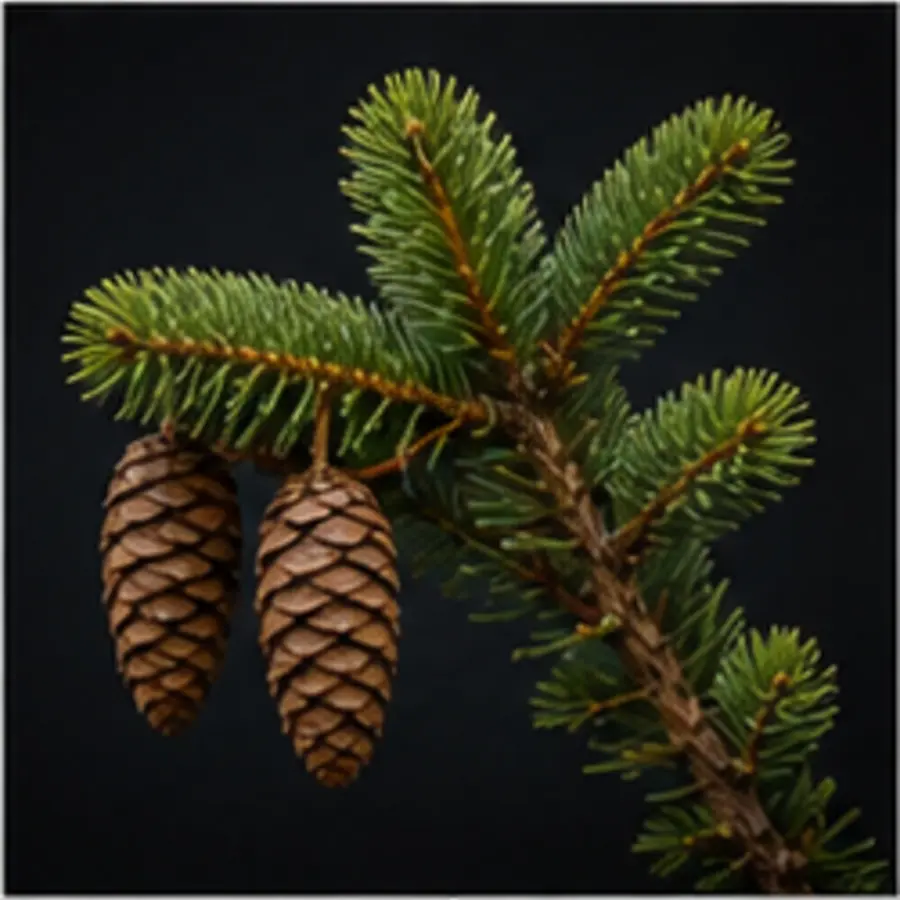
High-altitude Norway spruce
01 · Natural material

Origins & territories

France · Austria · Switzerland · Italy · Slovenia

Picea abies

Picea abies is a large conifer of mountain and northern European forests. Its stiff needles are arranged around the branches; ripe cones hang down and fall off whole. This habit of cones is a simple marker to distinguish it from the silver fir.

FranceAustriaSwitzerlandItalySlovenia
Alps · indicative area
02

Flowering & plant cycle

Pollination occurs around May in the Swiss benchmark. The leafy branches intended for aromatics are harvested according to the organization of the sector; their calendar is different from that of the cones. Altitude modulates the awakening of vegetation.

Flowering · botanical reference · Switzerland

  1. Jan
  2. Feb
  3. Mar
  4. Apr
  5. May · Indicative period
  6. Jun
  7. Jul
  8. Aug
  9. Sep
  10. Oct
  11. Nov
  12. Dec

Periods vary with region, altitude and yearly conditions.

03

From material to extract

Steam distillation of the branches and needles provides a resinous essential oil. Wood, bark and branches correspond to different resources; Perfumery material is described by the distilled part and its origin.

04

In a composition

Twig oil enriches forest accords and aromatic compositions. Bitter citrus fruits underline its liveliness; dry woods and a mossy nuance prolong the feeling of undergrowth. The dosage makes it possible to keep the resinous relief without saturating the space.

05

History & uses

Spruce also provides sought-after woods for musical instrument soundboards. The same tree can thus be studied for its aroma, its grain or its acoustic qualities, depending on the part chosen and the work of the craftsman.