← Back to the Herbarium
Green
Violet leaf
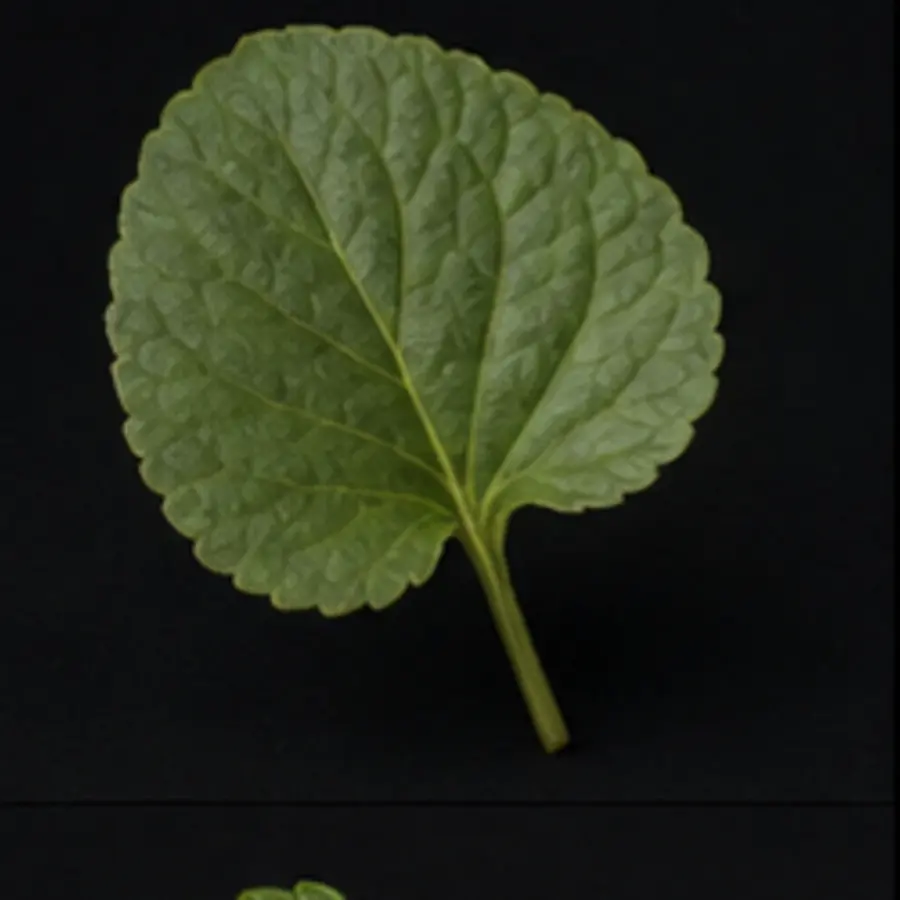
Viola odorataViolet leaf offers a vivid, moist greenness quite different from the powdery softness associated with the flower. Its absolute can develop towards mossy, leathery depth.
Green
France · Egypt
Viola odorataViola odorata is a Violaceae plant with Egypt as an important leaf-extraction origin. The processed material is foliage: the violet name should not suggest an oil distilled from the small purple flowers.
Leaves are cut during their growing period and taken for extraction. One Egyptian supply chain lists April–September. Repeated cuts may follow growth; freshness and the proportion of plant parts affect the extraction charge.
Periods vary with region, altitude and yearly conditions.
Solvent extraction gives concrete, then ethyl-alcohol purification yields the absolute. Leaf constituents create green, watery definition. The result is not leaf juice but a fraction obtained through successive separation operations.
One documented Egyptian absolute requires approximately 2,300 kg of leaves per kilogram of extract, or 230 kg for 100 g.
Violet leaf can give woods crushed-leaf freshness and orris a moist contrast. With citrus it sharpens greenness; within leather, its darker development becomes a textural bridge. It is therefore more than a green opening note.
The contrast between leaf and flower is particularly revealing here. Accords suggesting violet’s powdery petals are often built around other materials, notably ionones; leaf absolute describes another part of the plant.