← Back to the Herbarium
Gourmand
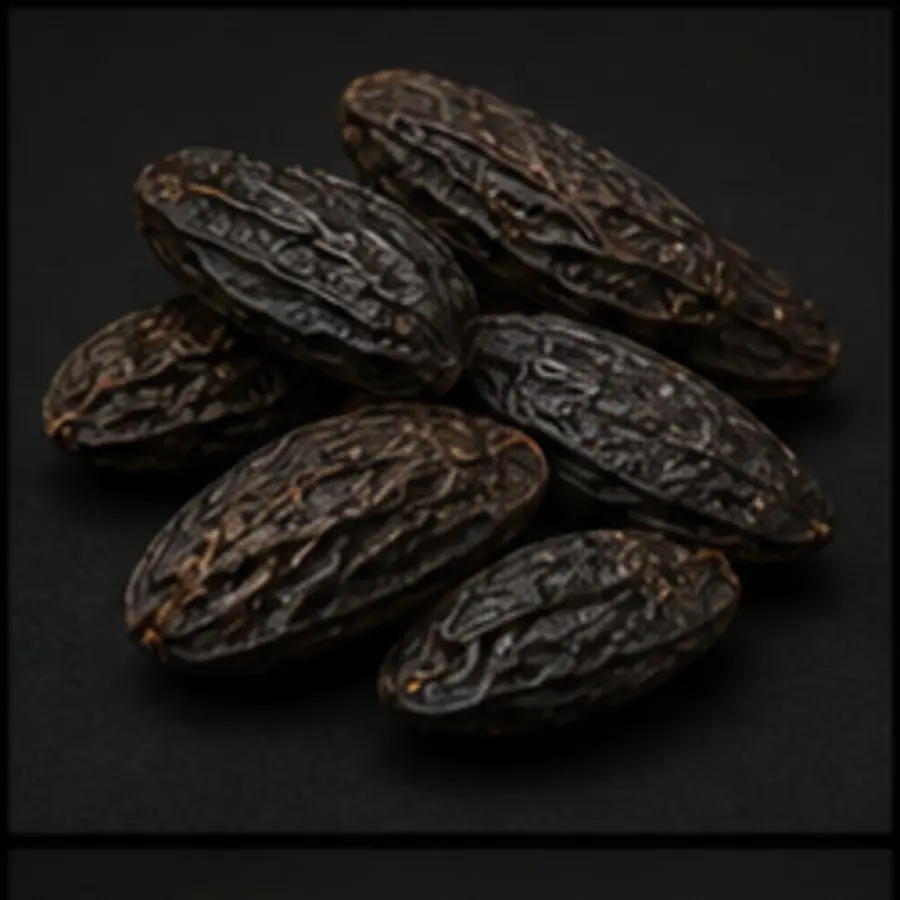
Tonka bean
Dipteryx odorataTonka bean unfolds almond, hay and blond-tobacco softness. Its absolute gives perfume powdery warmth with vanilla and praline nuances.
Gourmand
Brazil · Venezuela
Dipteryx odorataDipteryx odorata is a large South American Fabaceae tree. Brazil and Venezuela are reference origins. The fragrant “bean” is a seed within a fruit rather than a vanilla pod: the two materials can meet in an accord without sharing botanical identity.
Fruits are collected and opened, then seeds are prepared and dried. Drying and maturation contribute to the material’s developing character. One Brazil–Venezuela reference supply lists July–November; timing remains linked to the collection region.
Solvent extraction of the seeds followed by ethyl-alcohol purification produces an absolute. Coumarin plays a major role in its sweet-hay scent. The natural absolute nevertheless contains a range of compounds rather than this molecule alone.
One documented absolute reports approximately 40 kg of beans per kilogram of extract: 4 kg for 100 g.
Tonka rounds a fougère accord, supports vanilla and softens dry woods. Hay and tobacco facets also allow a less pastry-like sweetness. With orris, its powdery character gains the feel of warm fabric.
Coumarin, present in tonka bean, profoundly shaped perfume history. Its use in Fougère Royale in 1882 helped establish a major olfactive family. Its hay-like softness still connects lavender, green notes and woody bases within the fougère tradition.