← Back to the Herbarium
Coumarinic
Alpine hay
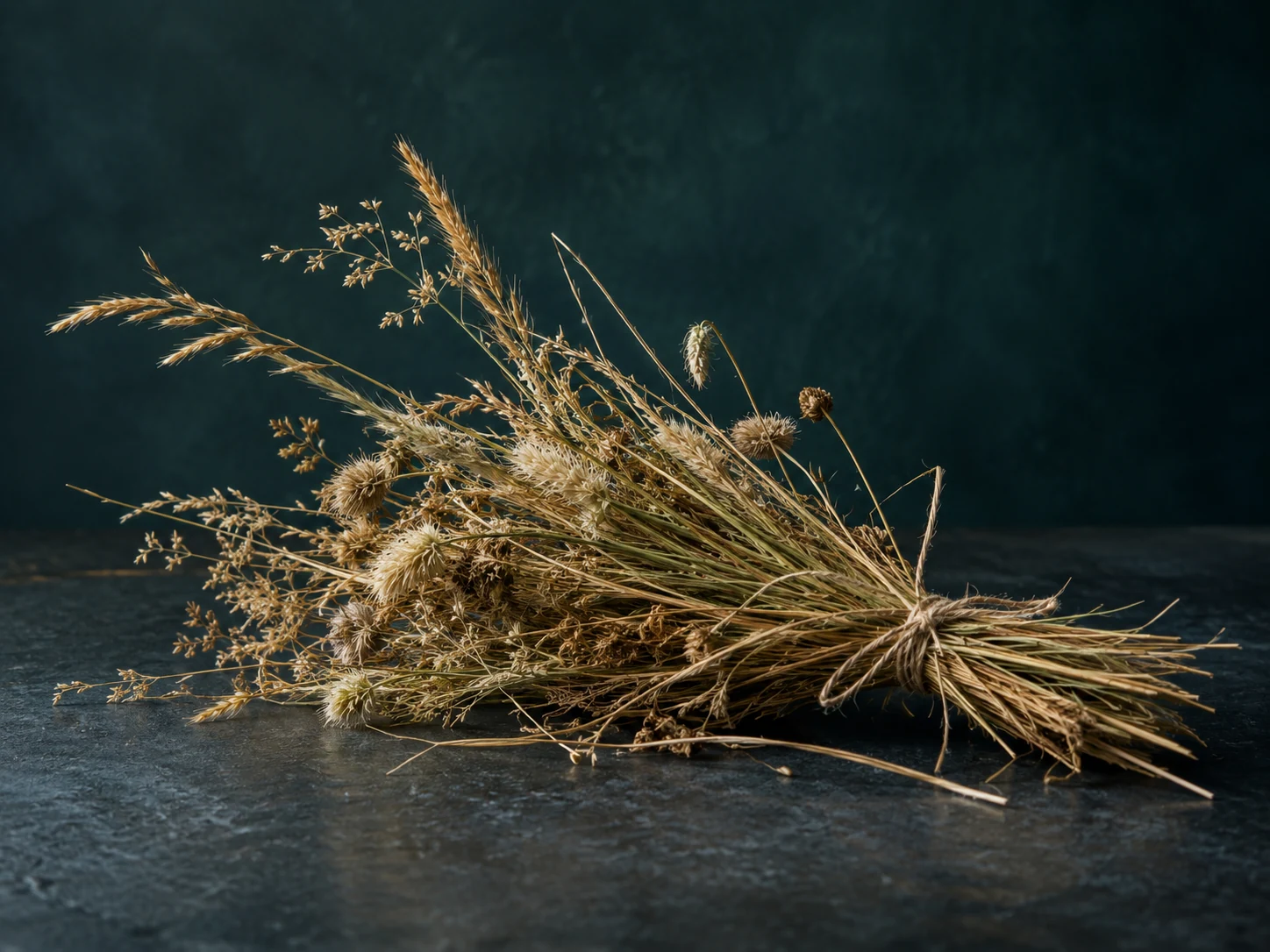
Dried grass, meadow softness and golden warmth: hay transforms a living landscape into olfactory material. Its fragrance gives the compositions a dry, velvety and slightly coumarinic texture.
Coumarinic
France · Austria · Switzerland · Italy · Slovenia
Hay is meadow vegetation that has been mown and dried: it combines grasses and other plants, rather than a species called “hay”. The mixture and drying conditions shape its scent.
The meadow is mowed, then the grass dries in contact with the air, with turning depending on agricultural work and the weather. Drying causes the plant odor to evolve. At altitude, cutting timing follows grassland growth and dry weather windows.
Dry hay can be extracted, then treated with alcohol and purified to produce an absolute. The plant mixture and its preparation shape the scent. A commercial absolute has its own documented origin; alpine pastures describe the landscape evoked here.
The register combines dry grass, sweetness and coumarin nuances. It links meadow accords, tobacco and certain amber constructions, without smelling like a tuft of fresh cut grass.
Coumarin is associated with the familiar smell of many dry herbs. The transition from green meadow to hay reveals how an agricultural preparation can transform a fragrant landscape, with a roundness that also evokes certain tobaccos and the tonka bean.