← Back to the Herbarium
Hinoki
Chamaecyparis obtusaHinoki suggests freshly worked pale wood, resinous freshness and the atmosphere of a Japanese bath. Its appeal lies in a clean woody outline with subtle aromatic shading.
Japan
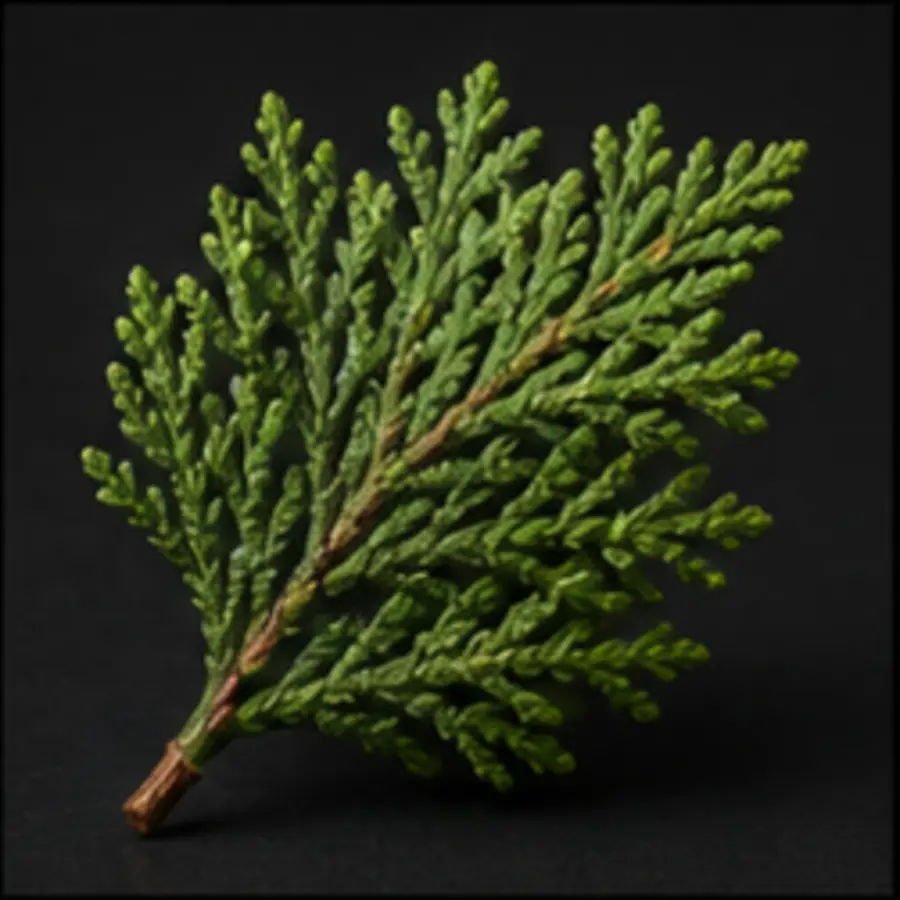
Chamaecyparis obtusaChamaecyparis obtusa, Japanese cypress, is a conifer in the Cupressaceae family. Japan is its reference territory. A supply chain in Shinjo, Okayama, makes separate oils from wood, branches and leaves.
Selecting the plant parts determines the future scent of the oil. Leaves are gathered, and branches and wood are prepared in separate batches. This separation makes it possible to work with several expressions of the same tree rather than blending them into an undifferentiated oil.
Steam distillation carries over the volatile molecules; cooling then allows the essential oil to be separated from the water. Wood oil and leaf oil share the same tree name but are distinct materials for fragrance composition.
Hinoki wood suits clean timber, quiet forest and dry freshness themes. A perfumer might pair it with citrus for brightness, resin for depth or musk for a more enveloping feel. These are compositional possibilities, not claims about a particular fragrance formula.
Comparing wood, branch and leaf oils reveals a small palette within the word hinoki. The impression of a place depends both on the chosen plant part and on the balance of leafy and resinous facets.