Floral
Blue lotus
Nymphaea caerulea (syn. Nymphaea nouchali var. caerulea)
Floral

Egypt
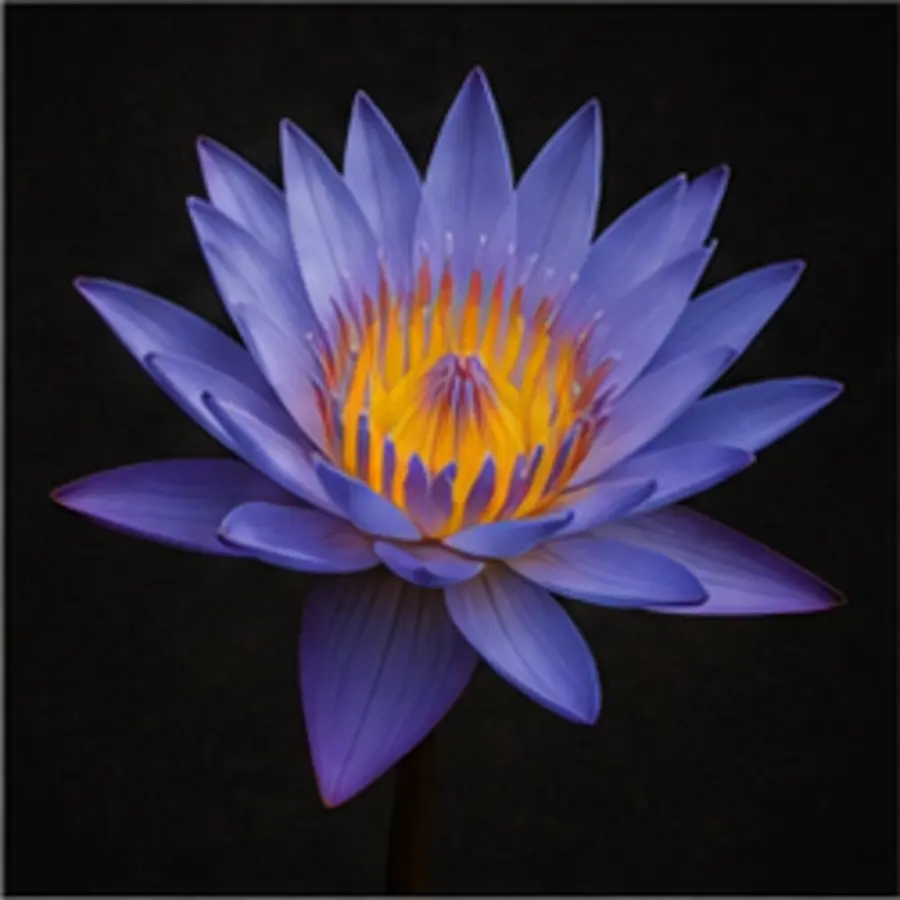
Nymphaea caerulea (syn. Nymphaea nouchali var. caerulea)The Blue lotus corresponds to the water lily Nymphaea caerulea, also treated as Nymphaea nouchali var. caerulea. This African aquatic plant has floating leaves and blue flowers with yellow centers. It belongs to a different genus than the Nelumbo lotuses.
An accord is composed, not harvested. Where relevant, the calendar refers to its natural inspiration.
The flowers follow an opening cycle linked to light and growing conditions. Their observation reveals the passage from the bud to the corolla deployed above the pond. In this atlas, the image of the water lily guides an aquatic floral accord.
Blue lotus accord can combine fine floral, soft musks and aqueous freshness. Flower extracts also exist depending on the sector, with defined processes; the composition presented here favors the transparency and softness of the water landscape.
The perfumer may look for a flower that is watery, sweet, and slightly powdery. The sensation of water in a perfume is an odorous effect, not pond water concentrated in the petals.
The blue water lily occupies a recognizable place in the iconography of ancient Egypt. Its flowers and buds appear in decorations and objects: a visual story which still nourishes the imagination today with a scent of pond and light.