← Back to the Herbarium
Gourmand
Mountain honey
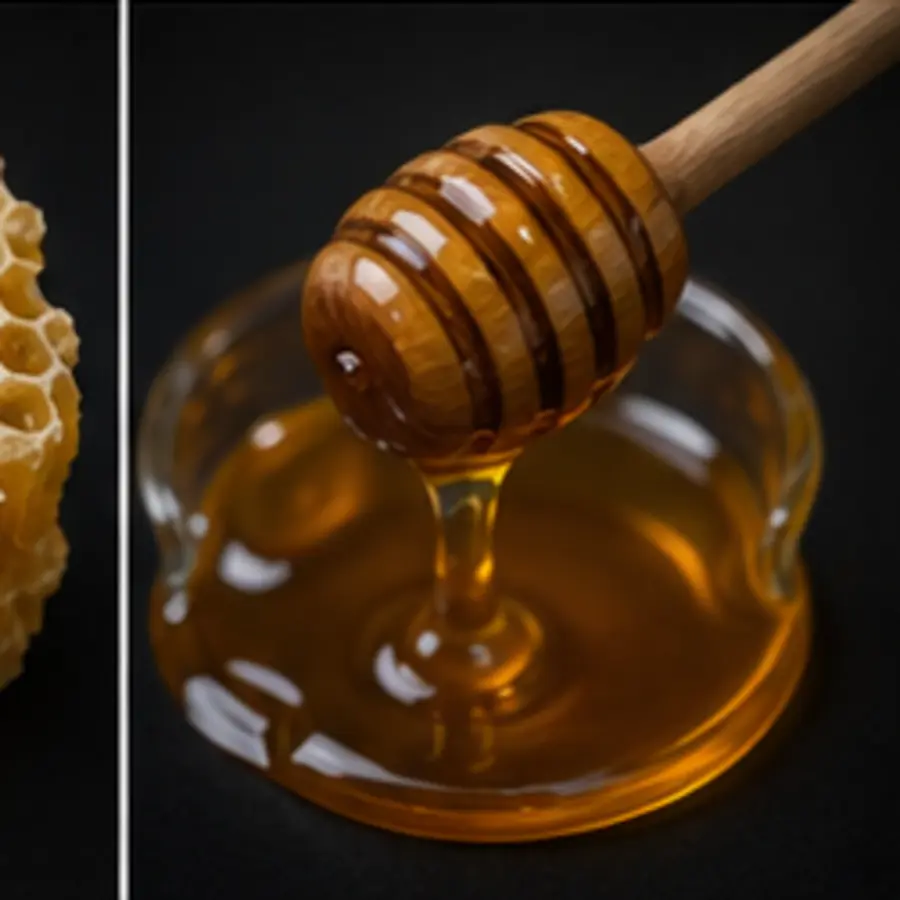
A floral sweetness, a waxy nuance and sometimes a woody shade: mountain honey offers a more complex register than a simple sweet sensation. Its accord can be luminous, deep or almost animal.
Gourmand
France · Austria · Switzerland · Italy · Slovenia
Mountain honey results from nectar or honeydew collected by bees. Its composition varies with the plants visited, the area and the year: it is not a plant with its own flowering period.
An accord is composed, not harvested. Where relevant, the calendar refers to its natural inspiration.
After the honey flow periods, the beekeeper takes frames containing the honey matured in the cells. Uncapping, extraction and filtration allow the food material to be collected. Its character depends on the resources visited and the conditions of the season.
The perfumer composes a honey accord with floral, waxy and sometimes animalic materials. A beeswax absolute can provide a natural relief distinct from edible honey. The composition retains a fragrant sensation and a warm texture.
A honeyed nuance enriches rose, a white flower or a hay base. Its waxy side can interact with woods; its more animalic side adds depth to a floral accord. Dosage determines the impression of light or density.
Nectar comes from flowers, while honeydew comes from secretions associated in particular with certain insects on plants. This diversity of resources explains why mountain honey can sometimes depict a flowery meadow, sometimes a more forested landscape.