← Back to the Herbarium
Oakmoss
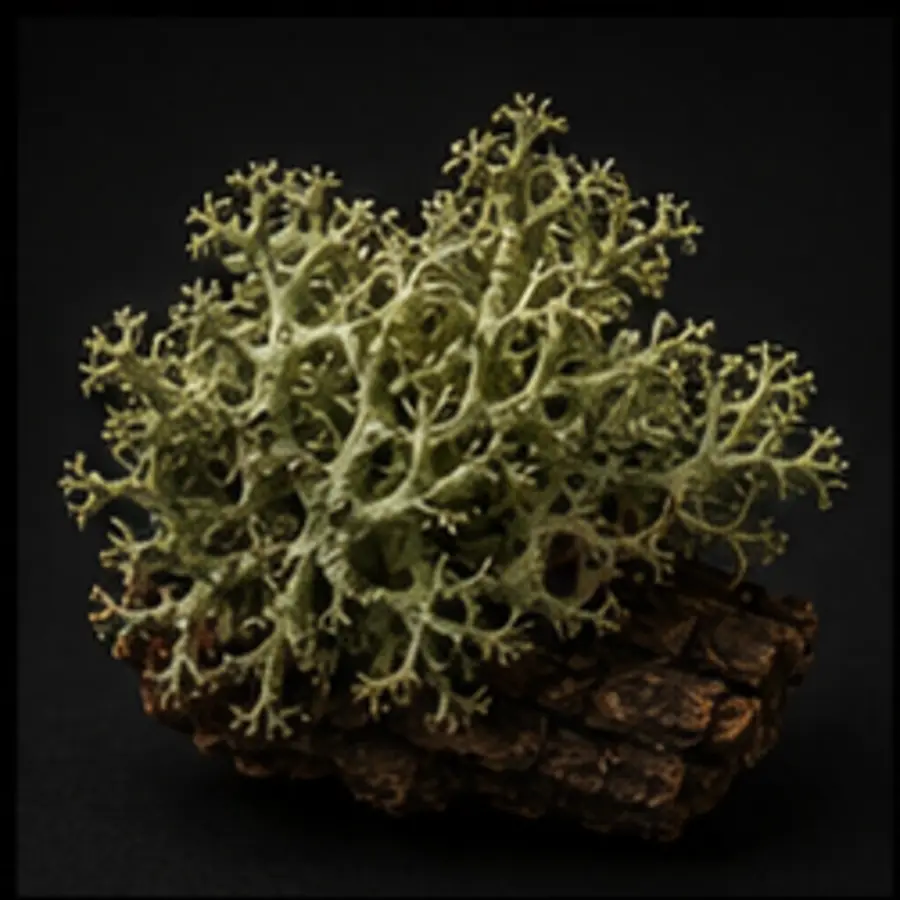
Evernia prunastriBehind this name lies a lichen with the scent of woodland: cool earth, bark and a bittersweet softness. Oakmoss gives compositions a dark, almost velvety foundation, linking flowers to woods.
Morocco · North Macedonia
Evernia prunastriEvernia prunastri is a lichen, an association between a fungus and a photosynthetic partner. It forms grey-green tufts on the bark of various trees, not only oaks. Perfumery supply chains gather it in North Macedonia and Morocco, including on trees between 600 and 1,100 metres. It differs from treemoss, generally associated with Pseudevernia furfuracea.
In these supply chains, gathering takes place in spring and autumn. The lichen is removed from trees, cleared of wood and bark fragments, then dried and pressed before processing. Its cycle is that of a lichen: gradual growth and a persistent presence on bark, with no flowering season. Careful sorting gives a more uniform material for extraction.
Solvent extraction of the dried lichen produces a concrete, subsequently processed into an absolute. Purification stages modify the profile and produce different perfumery qualities. The process also helps create the scent itself: some faintly scented substances in the lichen transform and contribute to the mossy signature.
Hexane extraction processes have yielded about 1.5–3% concrete from the lichen. A second stage turns this concrete into an absolute: the two yields relate to different stages and different products.
Oakmoss is a pillar of chypre structures and many fougères. It links bergamot brightness to labdanum warmth, extends woods and casts a shadow over bouquets. The effect goes beyond a forest impression: it also brings elegant dryness and a sense of depth.
This material has helped shape the vocabulary of major perfume families. Its strength lies in a scent that resists reduction to a single object: touches of wood, earth, leather and dried vegetation. It can therefore build an olfactory landscape from something that looks modest on a tree’s bark.