← Back to the Herbarium
Bitter orange
Citrus aurantiumBitter orange offers zesty freshness with a drier contour than the image of sweet orange. Its oil comes from the fruit of a tree that also provides several floral and leafy materials.
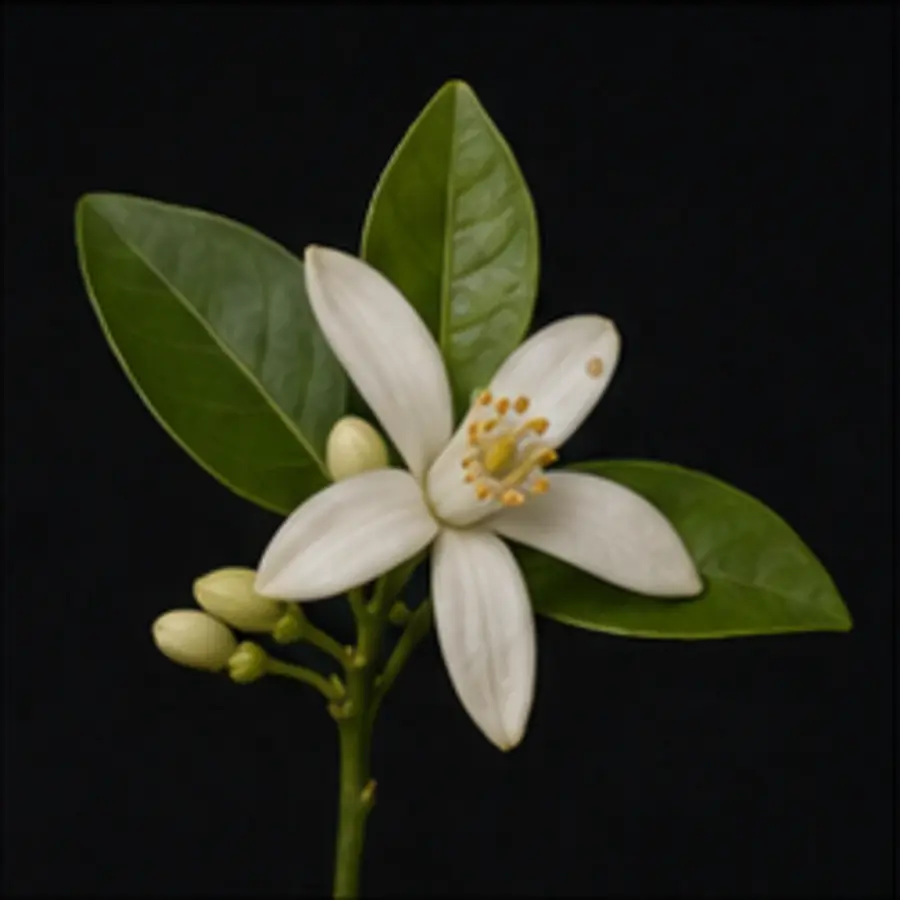
Tunisia · Spain · Morocco · Egypt
Citrus aurantiumCitrus aurantium is cultivated notably around the Mediterranean. Egypt supplies a documented expressed bitter-orange oil for perfumery. Fruit peel, blossoms and leafy twigs each have their own fragrant composition.
Fruits are picked and taken to the extraction facility. One Egyptian grade lists October and November. This fruit calendar differs from the spring flowering used for neroli and orange-blossom absolute.
Periods vary with region, altitude and yearly conditions.
Cold expression mechanically releases oil from the peel. After separation it retains a zesty, fruity signature. Distilling blossoms produces neroli; distilling leaves and twigs produces petitgrain. These processes work on different parts of the tree.
One Egyptian oil reports approximately 300 kg of plant material per kilogram of oil, or 30 kg for 100 g.
Bitter orange gives citrus openings character and naturally accompanies petitgrain and neroli. It can lighten amber, awaken woods or give vanilla softness a dry inflection. Some grades also show floral and aldehydic refinement.
The bitter-orange tree is a remarkable example of a palette carried by one tree. Simply saying “orange” conceals the perfumer’s choice between zest, foliage and flower to create very different effects.