← Back to the Herbarium
Floral
Bird’s-eye primrose
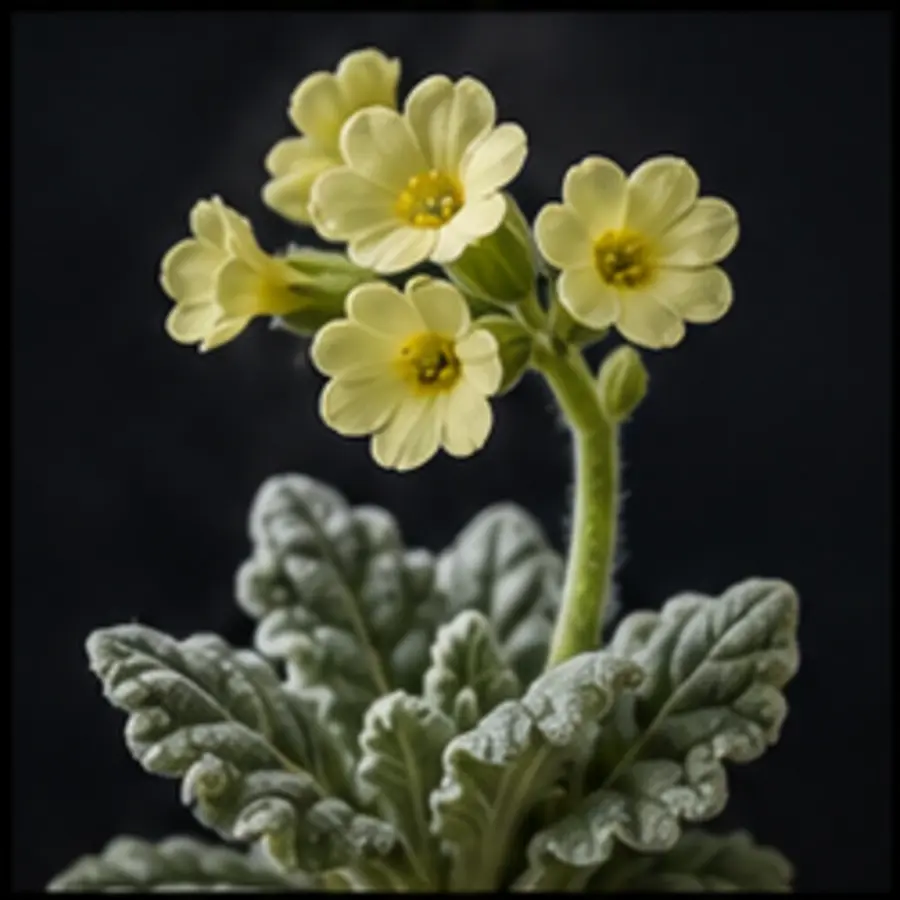
Primula farinosaLilac-pink flowers rise above a pale-leaved rosette in damp meadows. The mealy appearance associated with this primrose describes its leaves, rather than a powdery scent.
Floral
France · Austria · Switzerland · Italy · Slovenia
Primula farinosaPrimula farinosa is a small member of the Primulaceae family. Leaves form a ground-level rosette and carry a whitish coating beneath. Lilac-pink flowers with yellow throats gather into an umbel at the top of a stalk. In Switzerland it occurs particularly in calcareous fens, wet meadows and along streams, from mountain areas into the Alps.
The Swiss flowering reference extends from May to July. Moisture is essential to its habitat. The flowering umbels then give way to seed-containing capsules, while the foliage retains its fine, pale coating.
Periods vary with region, altitude and yearly conditions.
Its evocation is composed as a floral accord. The delicacy of the umbels, the green rosette and the freshness of its damp habitat guide the choice of light, transparent materials.
An interpretation might favour a quiet, fresh floral impression with damp green nuances. Introducing a powdery facet would be a separate creative decision: the mealy appearance of the leaf does not establish the flower’s scent profile.
Two details prevent a hasty reading: the lilac-pink flowers and the pale undersides of the leaves. The French common name, meaning mealy primrose, highlights the latter, whereas the image of the plant is often dominated by the former.