← Back to the Herbarium
Balsam fir
Abies balsameaBalsam fir suggests a cool forest with resinous softness. Its needle oil and resin come from the same tree, but their processing and scents differ.
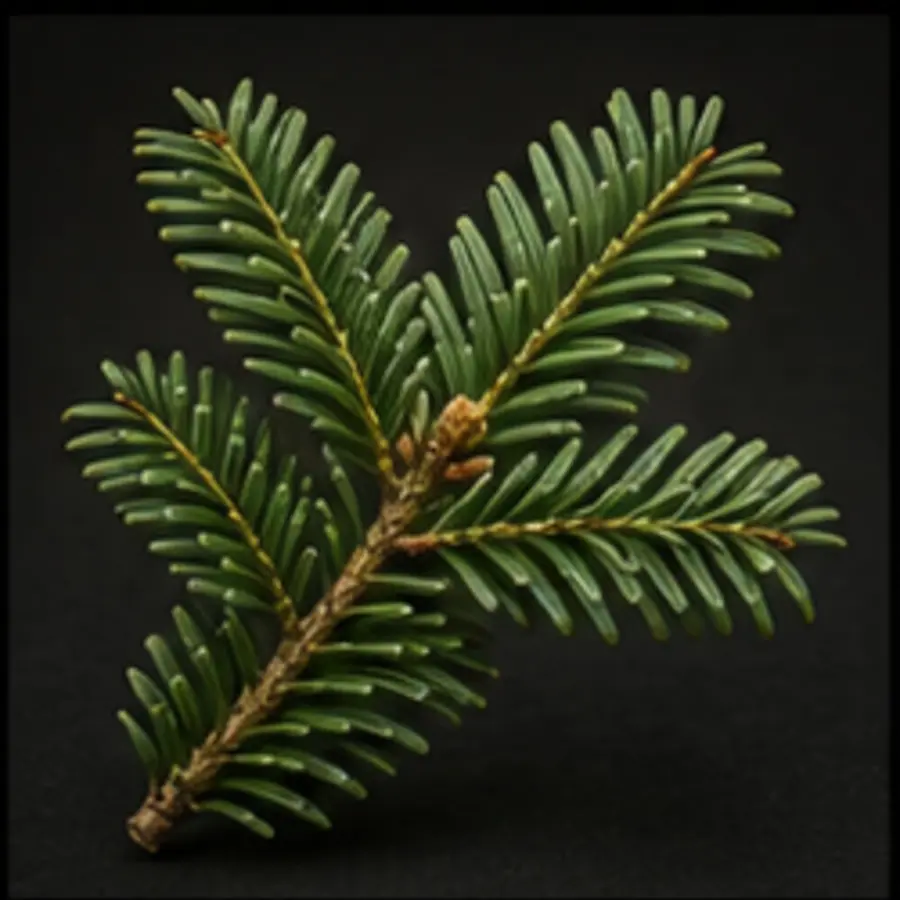
Canada
Abies balsameaAbies balsamea is a North American conifer closely associated with Canadian forests. Its needles are distilled, while its resin is also known as Canada balsam. That balsam name should not obscure the actual plant part used in an extract.
Leafy twigs are gathered and prepared for distillation. Campaigns depend on region and forestry operations; evergreen foliage does not mean every batch is harvested under identical conditions. A published summer distillation experiment in 2018 specifically used needles.
Needle distillation produces a volatile oil in which pinenes and bornyl acetate contribute to the forest character. Extracting bark or resin would produce a different material; results obtained from those parts do not automatically describe needle oil.
A 2018 distillation of balsam-fir needles yielded approximately 0.8%, equivalent to around 8 g of oil per kilogram of material.
It brings conifer freshness rounded by a balsamic accent. In a woody accord it can suggest air between branches rather than a solid block of dry timber. Juniper, citrus and cedarwood extend that impression in brighter or deeper directions.
“Balsamic” here describes a soft, resinous scent impression. It does not mean needle oil is simply liquid resin: distillation selects a particular volatile fraction.