Maison du Lac Évian-les-Bains
Cart
EN
FrançaisEnglishEspañolDeutschItalianoNederlandsالعربية简体中文Polski日本語Português (Portugal)한국어SvenskaБългарскиΕλληνικάDansk
Menu
← Back to the Herbarium

Alpine silver fir

Abies alba
A flat needle, a resinous freshness and a woody sweetness: the silver fir gives the mountain forest ample breathing space. Its scent can be read as a balance between green clarity and a calming base.
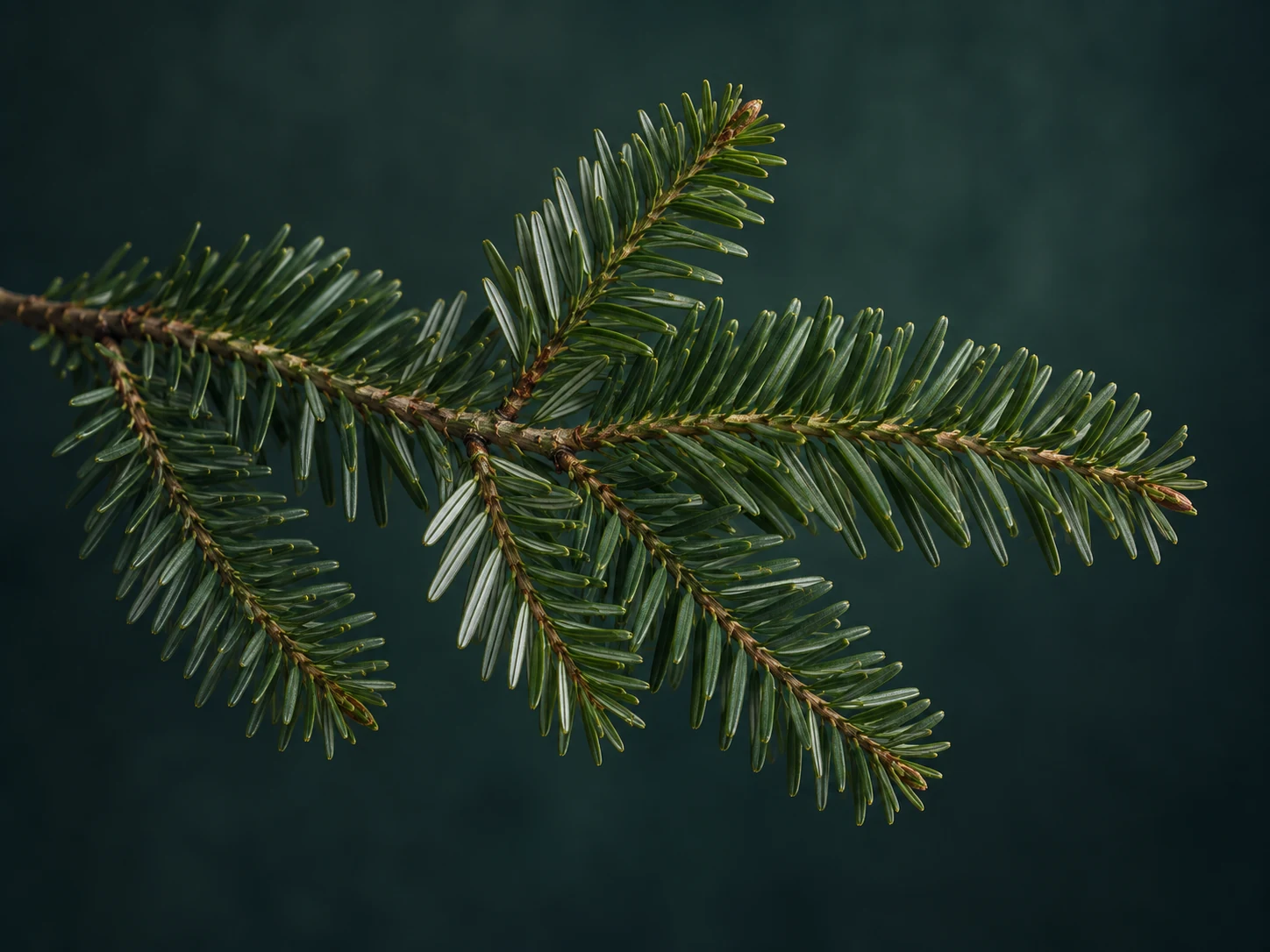
Alpine silver fir
01 · Natural material

Origins & territories

France · Austria · Switzerland · Italy · Slovenia

Abies alba

Abies alba grows in European forests on sufficiently deep soils. Its flat needles have two white bands on their underside. The cones stand on the branches and disintegrate when mature, leaving their axis on the tree.

FranceAustriaSwitzerlandItalySlovenia
Alps · indicative area
02

Flowering & plant cycle

Pollination occurs around May in the Swiss region. For aromatic productions, leafy branches are selected and prepared separately from the wood. The cutting date depends on the sector; the atlas distinguishes this operation from the pollination period.

Flowering · botanical reference · Switzerland

  1. Jan
  2. Feb
  3. Mar
  4. Apr
  5. May · Indicative period
  6. Jun
  7. Jul
  8. Aug
  9. Sep
  10. Oct
  11. Nov
  12. Dec

Periods vary with region, altitude and yearly conditions.

03

From material to extract

The distillation of the branches and needles provides an essential oil of silver fir. After passing through the plant, the steam is condensed, then the oil is separated from the water. This material highlights the volatile components of the leafy part.

04

In a composition

The silver fir can bring a resinous breath to herbs, woods and citrus fruits. A musky texture softens the base, while a touch of green maintains the sharpness of the branch. The whole suggests a luminous and deep forest.

05

History & uses

The word white can be read in particular under the needles, on the two light lines very visible when you turn over a branch. The erect cones offer a second marker: the identification of the fir is based on details which remain useful well beyond the aromatic season.