Maison du Lac Évian-les-Bains
Cart
EN
FrançaisEnglishEspañolDeutschItalianoNederlandsالعربية简体中文Polski日本語Português (Portugal)한국어SvenskaБългарскиΕλληνικάDansk
Menu
← Back to the Herbarium

Aromatic

Alpine wild thyme

Thymus praecox subsp. polytrichus
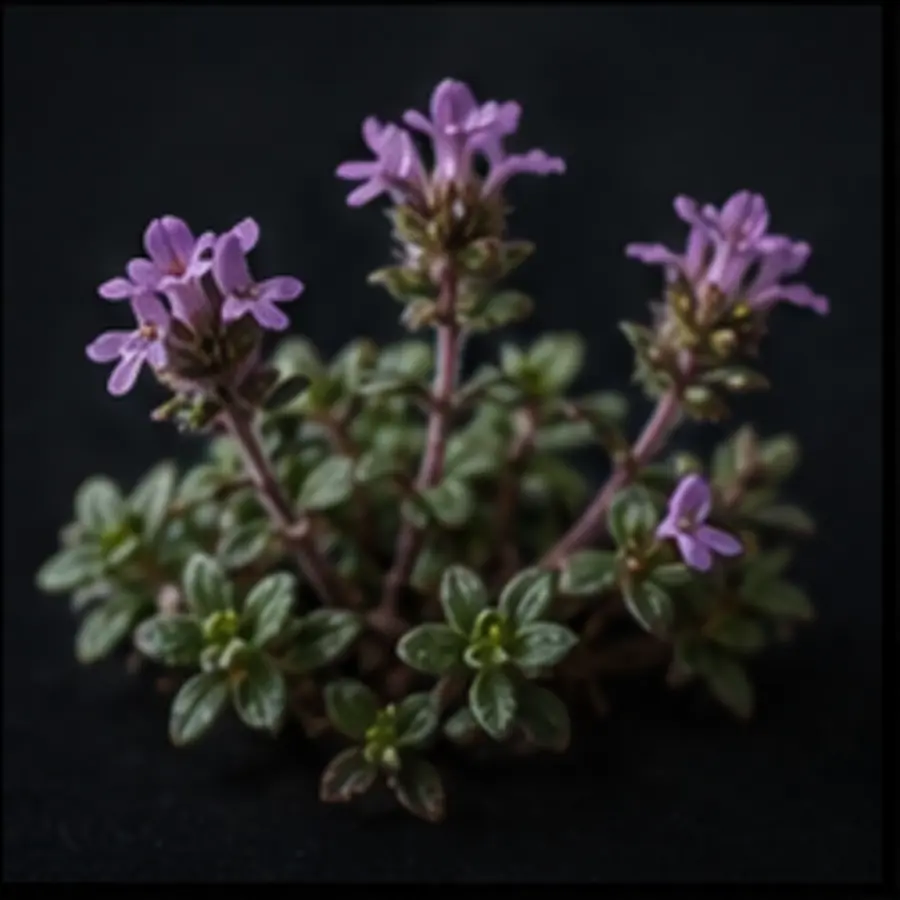
A flowery carpet heated by the sun, a scent of thyme at the level of the stones: the Alpine wild thyme concentrates the aromatic relief of the grassland. Its accord is dry, herbaceous and punctuated with a discreet warmth.
Alpine wild thyme
01 · Botanical inspiration

Origins & territories

France · Austria · Switzerland · Italy · Slovenia

Thymus praecox subsp. polytrichus

Thymus praecox subsp. polytrichus belongs to the group of wild thymes, small creeping thymes of the Lamiaceae. Its low stems bear small leaves and pink flowers. It frequents mountain grassland and rocky habitats, where its vegetation hugs the ground.

FranceAustriaSwitzerlandItalySlovenia
Alps · indicative area
02

Flowering & plant cycle

The selected botanical reference flowers from June to September. Its aerial parts are the material studied for aromatic processing; choosing a harvest for an extract depends on the developmental stage and batch, not simply on the presence of flowers.

Flowering · botanical reference · Switzerland

  1. Jan
  2. Feb
  3. Mar
  4. Apr
  5. May
  6. Jun · Indicative period
  7. Jul · Indicative period
  8. Aug · Indicative period
  9. Sep · Indicative period
  10. Oct
  11. Nov
  12. Dec

Periods vary with region, altitude and yearly conditions.

03

Interpretation and composition

Aromatic thymes can be worked by distillation of the aerial parts. The botanical identity and profile of the batch make it possible to describe the oil obtained: the different species of Thymus have varied aromatic balances. In this atlas, the accord interprets a carpet of living wild thyme.

04

In a composition

Wild thyme inspires a warm, dry, herbaceous accent within a meadow composition. Bitter citrus can introduce the opening, while fine woods prolong its aromatic character. A floral touch recalls the small pink carpets of summer.

05

History & uses

The creeping habit visually distinguishes wild thymes from the more upright tufts of certain garden thymes. This low growth places the leaves in contact with the warmth of the stones, a landscape detail which inspires the contrast between herbaceous freshness and dry mineral background.