← Back to the Herbarium
Floral
Tuberose
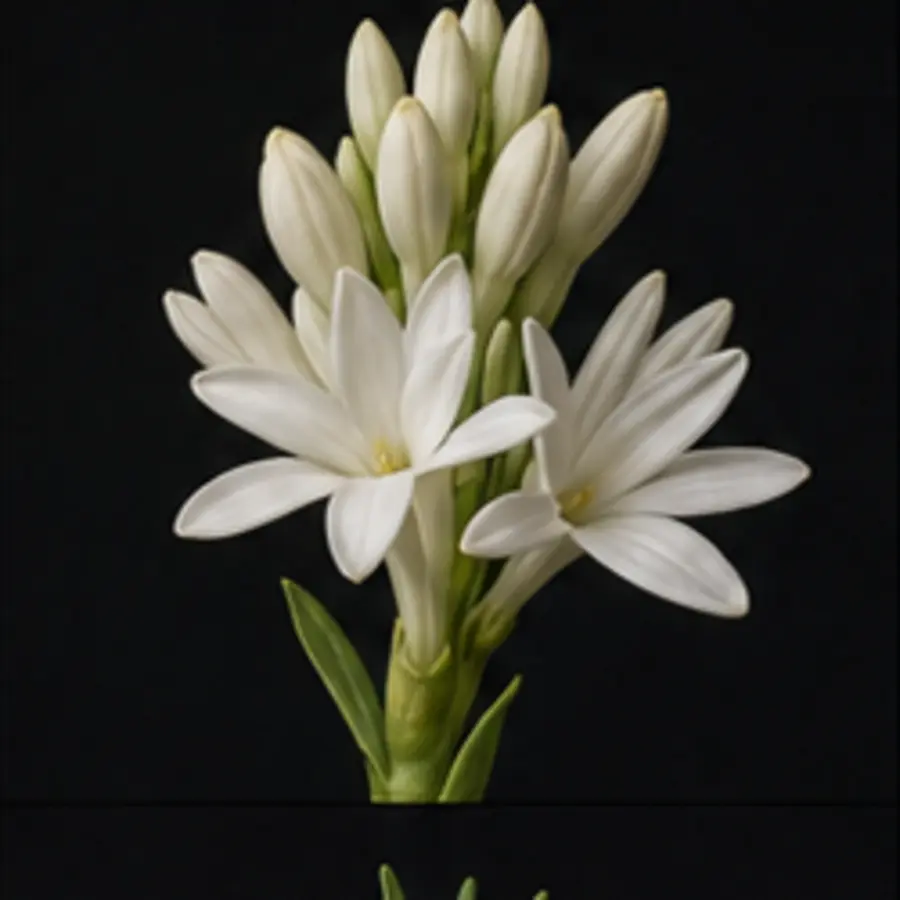
Agave amicaTuberose is a flower of volume and contrast: white and luminous, yet creamy, green, spicy and sensuous. Its absolute is one of perfumery’s distinctive floral materials.
Floral
India
Agave amicaTuberose, traditionally named Polianthes tuberosa, is cultivated for its spikes of white flowers. India, particularly the south, is an important origin for extracts. Flower spikes sold as cut flowers must be distinguished from loose blossoms used in other channels. A shared white colour does not make tuberose botanically close to jasmine.
Flowers are hand-picked through repeated visits as blossoms open. Flower stage and rapid transport to extraction influence the profile. One reference Indian grade lists two campaign periods: April–May and September–October.
Periods vary with region, altitude and yearly conditions.
Solvent extraction produces a concrete; purification with ethyl alcohol yields the absolute. In one documented supply chain, flowers are processed in India and the concrete becomes absolute in Grasse. Historically, enfleurage also captured their scent in fat. These methods do not produce exactly the same olfactory material.
One reference Indian absolute reports about 7,000 kg of floral material per 1 kg of absolute, or about 700 kg of flowers per 100 g.
The absolute may combine floral opulence, green and spicy facets, and lactonic nuances sometimes recalling coconut. It creates a solar, enveloping effect, while its green side can add tension. Creaminess describes a sensation, rather than the presence of milk. Tuberose can lead a composition or lend a bouquet volume.
Enfleurage illustrates the patience once required for certain flowers: fat was brought into contact with repeatedly renewed blossoms to absorb their scent gradually. Modern absolute production follows another processing chain while pursuing the same floral richness.