← Back to the Herbarium
Vanilla
Vanilla planifoliaVanilla is the prepared fruit of an orchid, rather than the scent of its flower. Behind familiar sweetness lie balsamic, woody, spicy and sometimes leathery nuances.
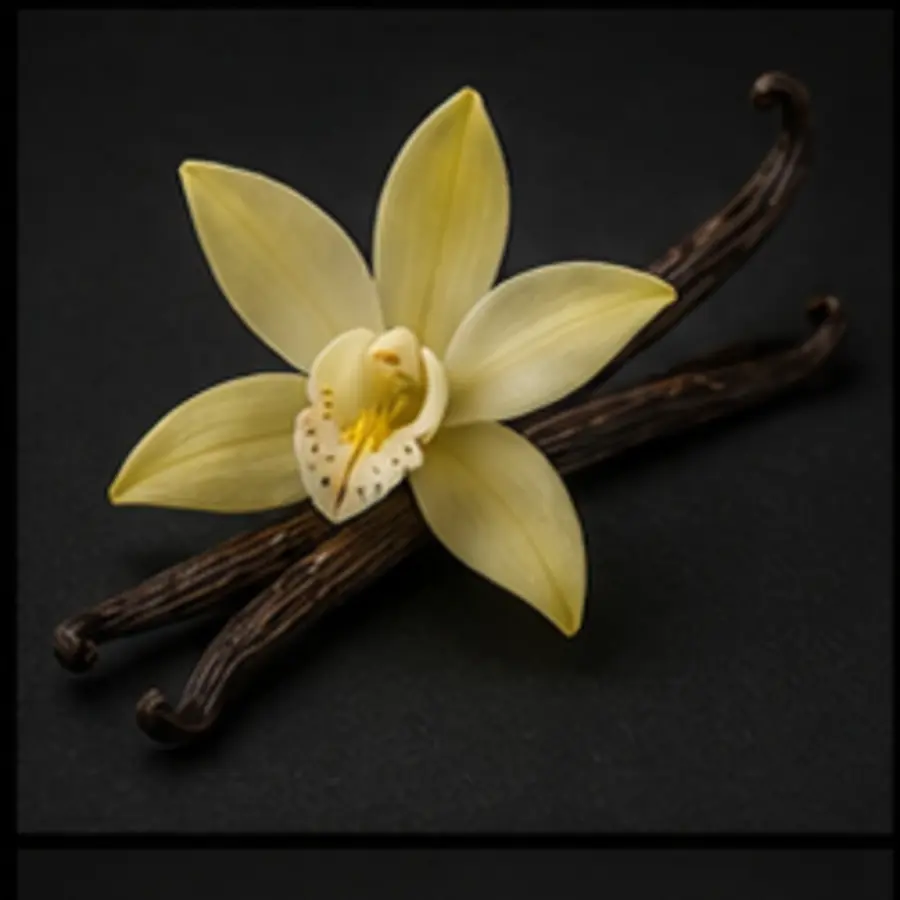
Comoros · Madagascar · Uganda
Vanilla planifoliaVanilla planifolia is a climbing orchid. Madagascar, particularly the northeast and Sava region, is a major reference origin; Uganda and the Comoros also have supply chains. Bean or pod is the usual term, but botanically the fruit is a capsule. Species and origin matter: Tahitian vanilla should not be treated as simply another origin of the same material.
Fruits are harvested at an appropriate maturity and then undergo prolonged preparation and drying. Green fruit does not yet possess the character of a brown cured bean. One Madagascar supply chain for a CO₂ extract lists May to August; this does not replace local calendars. Post-harvest work contributes as much to the material’s identity as growth on the vine.
Periods vary with region, altitude and yearly conditions.
Perfumery uses absolutes, hydroalcoholic preparations and CO₂ extracts, among other grades. An absolute can be solvent-extracted and purified with alcohol. Supercritical CO₂ is another route, with its own processing settings and yield. Vanillin alone is one molecule and does not represent the full complexity of a natural bean extract.
One Madagascar CO₂ grade reports about 15 kg of beans per 1 kg of extract, or about 1.5 kg of beans per 100 g.
Vanilla brings roundness and connects woods, balsams and ambery accords. Depending on the grade, leather, tobacco or spice can accompany its sweetness. In a gourmand accord it may suggest pastry, yet it can also give a dry composition body. Vanilla-like therefore does not automatically mean sugary.
Vanilla begins with a tiny gesture: in commercial cultivation, flowers are generally pollinated by hand. Their brief opening requires attentive work long before the fruit’s months of development. A second period of patient preparation and drying then transforms the green capsule into a fragrant brown bean.