← Back to the Herbarium
Aromatic
Angelica
Angelica archangelicaGreen, earthy and gently musky, angelica root has a singular elegance. Its freshness does not come from the zest: it evokes the vegetal in its depth, with a little spicy warmth.
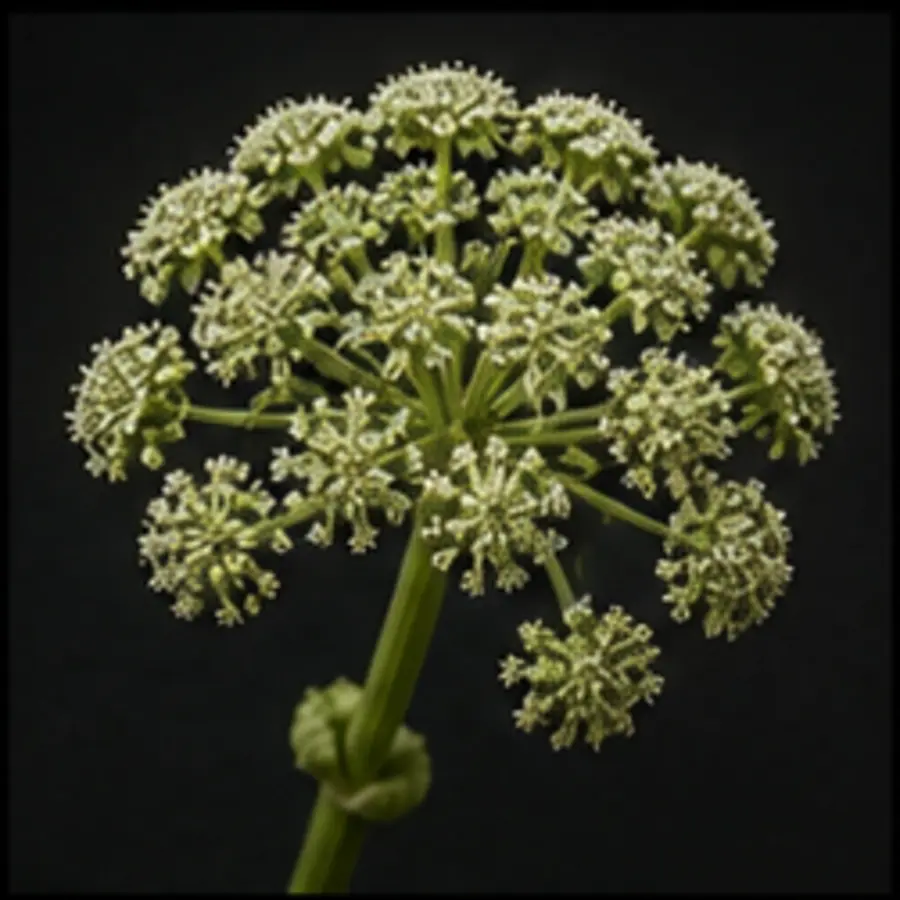
Aromatic
France · Poland · Germany
Angelica archangelicaFrance and several other European countries are origins of garden angelica, Angelica archangelica. Roots and fruits yield different materials; the name “angelica” alone is insufficient.
The roots are pulled out at a stage suited to the growing cycle, cleaned and then prepared. The fruits are harvested after ripening: they are neither the same organs nor the same campaign. In the French sector benchmark chosen for root oil, the campaign takes place in February-March; that of fruits occurs later in the year.
Periods vary with region, altitude and yearly conditions.
Distillation can provide root oil or seed oil, which must be named separately. An alcoholic preparation or culinary angelica ingredient is distinct from these concentrated oils.
Angelica root brings an earthy, green and musky, sometimes spicy freshness. It combines woods, musks and aromatic accords with an elegance less sweet than a large flower.
Culinary tradition also uses candied angelica stems, particularly associated with Niort. Confectionery values a tender, aromatic plant part; perfumery based on the roots seeks a different face of the plant, earthier and muskier.