← Back to the Herbarium
Massoia wood
Cryptocarya massoyCoconut milk, warm cream and supple wood: massoia has a distinctive milky character. That gourmand impression originates in the tree, without added coconut.
Papua New Guinea · Indonesia
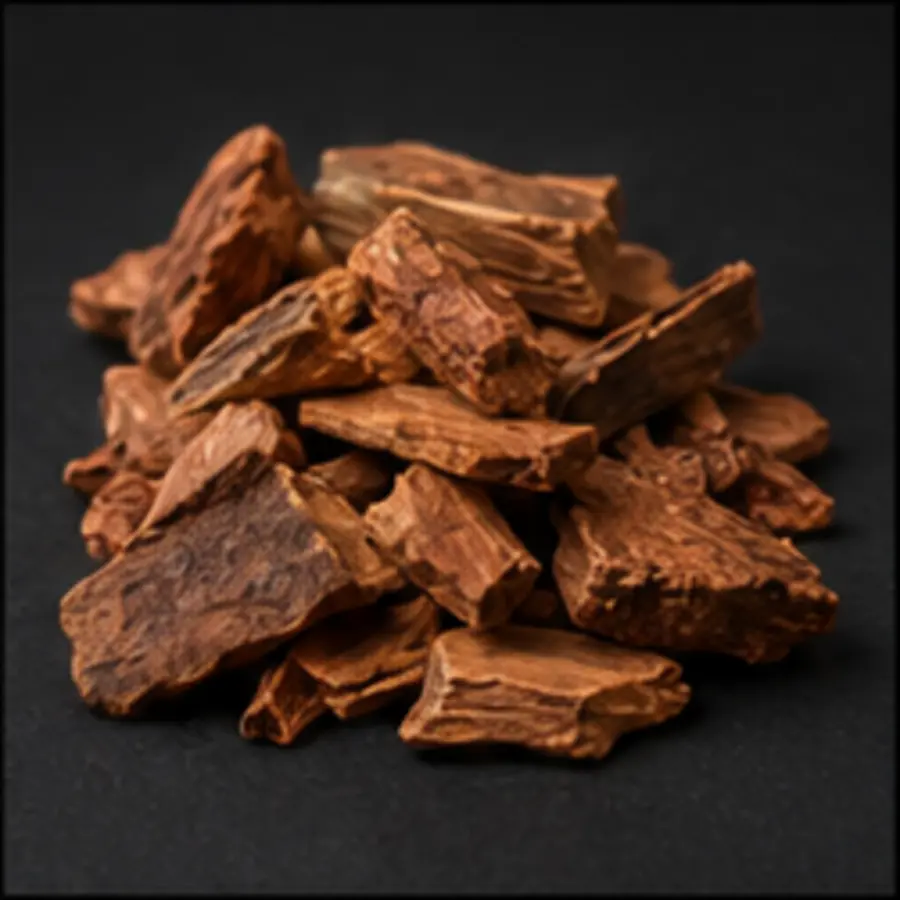
Cryptocarya massoyCryptocarya massoy is a member of the laurel family from New Guinea. Papuan supply chains feed Indonesian processors, among others. Despite the familiar name massoia wood, bark is the principal material worked for perfumery.
Bark is collected, transported and prepared for extraction. The journey from forest collectors to processing facilities is a significant part of the material’s story. The island of origin and the place of extraction are not necessarily the same.
Steam distillation of bark produces an oil rich in massoia lactones. Other supply chains use CO₂ extraction and may subsequently separate individual lactone fractions. Whole oil and isolated fractions give the perfumer different tools.
That study obtained 0.7% oil from bark and 1.2% from heartwood by hydrodistillation. These figures describe the studied samples and method, not a universal yield for commercial production.
Massoia can lend creaminess to woods and a sunny warmth to white-floral accords. Its coconut suggestion may enrich a gourmand theme or soften a dark base without turning it into a dessert.
Lactones explain this unexpected bridge between bark and cream. In a study of material from Papua New Guinea, bark and heartwood oils were dominated by C10 and C12 lactones, whereas fruit oil had a different composition.