← Back to the Herbarium
Cinnamon
Cinnamomum verumCeylon cinnamon unfolds a soft, woody, luminous warmth. Bark-derived material does not have the same balance as its leaf oil.
Sri Lanka
Cinnamomum verumCinnamomum verum, also called Cinnamomum zeylanicum, is a Lauraceae tree with Sri Lanka as its emblematic origin. It must be distinguished from cassia-type cinnamons: species, plant part and process together define the fragrant material.
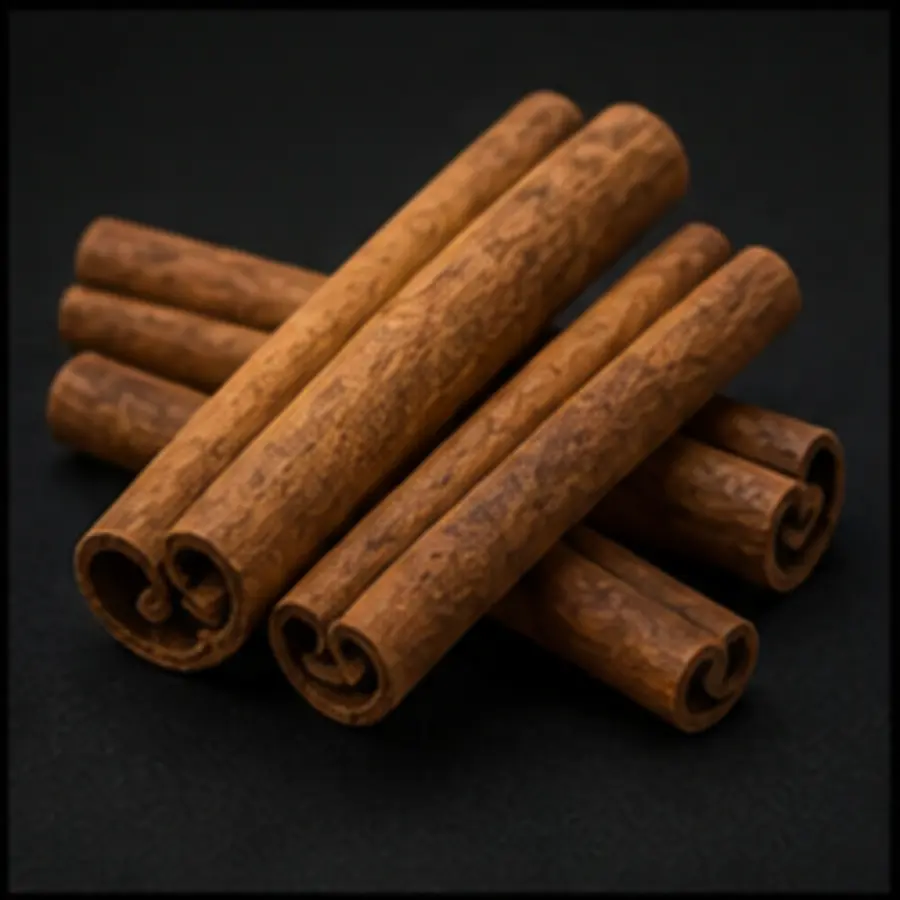
Stems are cut and prepared by skilled workers who remove outer bark and peel the inner layers. During drying, thin strips curl into quills. In Sri Lanka, ease of peeling and the stage of new leaves guide cutting; agroclimatic conditions shape harvest campaigns.
Bark can be distilled into a cinnamaldehyde-rich essential oil. Leaf distillation yields another oil, generally more strongly marked by eugenol. Bark fragments generated during quill preparation can also supply oil production.
Cinnamon bark warms ambers, supports vanilla and gives woods spicy depth. Its line can feel elegant and dry beside cedarwood or frankincense. A pastry impression depends on the surrounding accord rather than its presence alone.
Preparing cinnamon quills remains skilled work: thin bark layers are detached, assembled and dried. Fine grades, including Alba, give this craft its value, while fragments from shaping can supply distillation. The spice connects hand craftsmanship with fragrant material.