← Back to the Herbarium
Virginia cedarwood
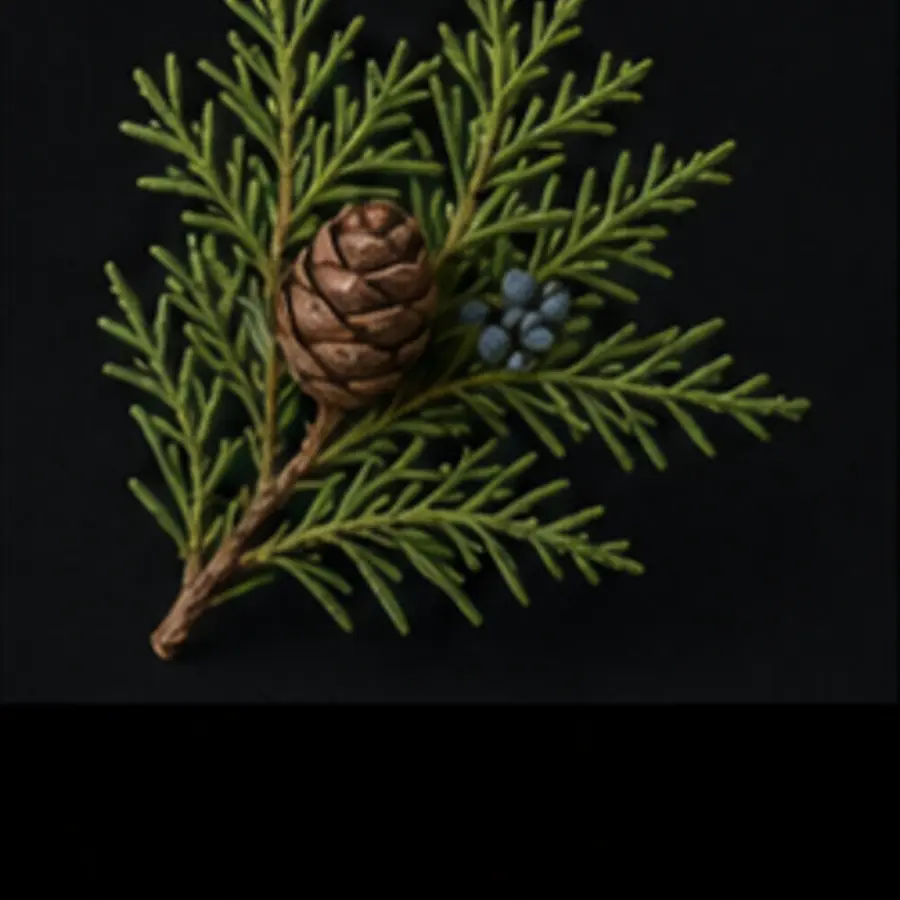
Juniperus virginianaVirginia cedarwood recalls freshly sharpened pencil wood: dry, precise and softly ambery. It comes from Juniperus virginiana, an American juniper.
United States
Juniperus virginianaThis North American species belongs to the Cupressaceae. The perfumery material is produced in the United States from its wood. “Virginia” identifies a botanical and commercial type; the name alone does not establish that every batch originates in the state of Virginia.
Wood chips, including woodworking by-products, form the distillation charge. Their preparation and storage allow oil production to follow the rhythm of timber supplies.
The fragmented wood is distilled with water or steam. The oil is separated from the condensate by decantation. Subsequent rectification allows fractions to be selected and the woody profile to be refined.
One documented American oil gives a 2.3–3.5% yield from wood chips: approximately 2.9–4.3 kg for 100 g of oil.
Its dry line defines a woody accord and moderates the sweetness of vanilla or amber. It accompanies orris, vetiver and musks with a neatly cut timber impression. It is generally less creamy than the scent image associated with sandalwood.
The pencil reference is a useful sensory landmark: it describes wood rather than graphite. The word “cedar” brings together materials from different botanical families whose scent profiles are not interchangeable.