← Back to the Herbarium
Animalic
Alpine beeswax
Beeswax carries the warmth of a hive: soft honey, dried fruit and a balsamic base. It lends perfume an enveloping texture, more muted than the immediately sweet image of honey.
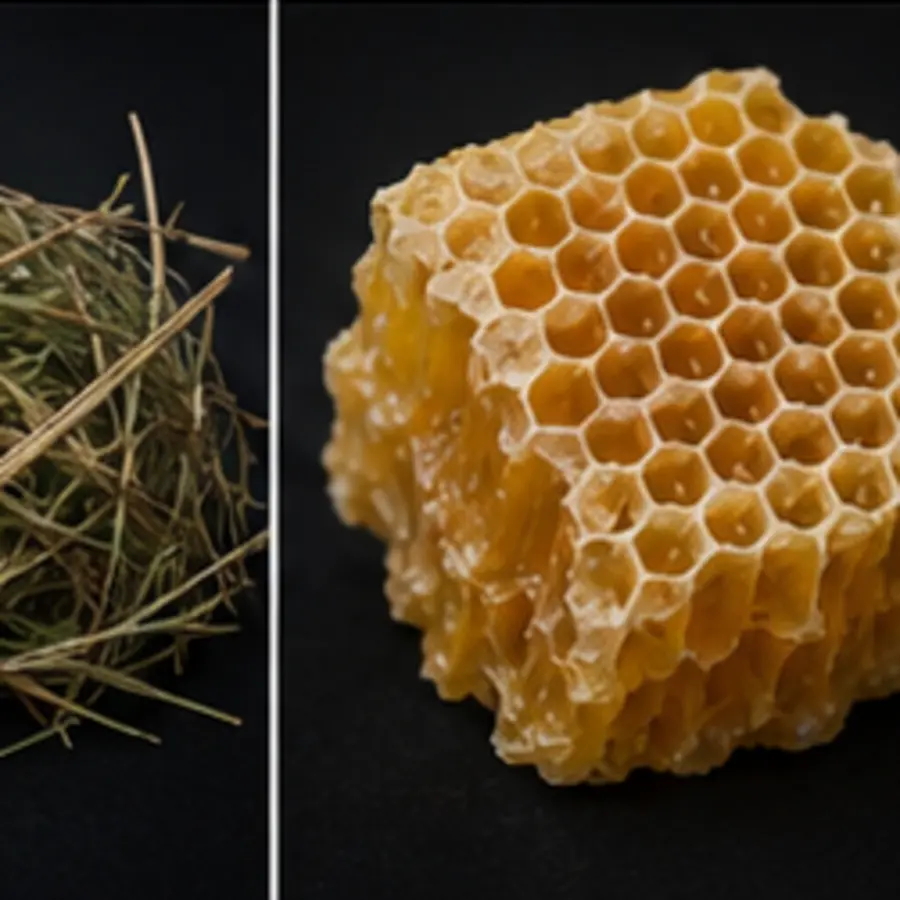
Animalic
France · Austria · Switzerland · Italy · Slovenia
Bees produce this material to build the hive’s honeycomb. The Alpine evocation refers to mountain apiaries and flowering landscapes; perfumery absolutes come from several supply chains, including French upland production. The precise origin of the apiaries is a characteristic of each lot.
Wax is recovered as part of beekeeping, during honeycomb management and renewal. Its calendar therefore follows the care of the hives rather than one flowering season. One French extraction supply chain uses combs removed during hive renewal, collected through a network of selected beekeepers.
To obtain the absolute, honeycomb undergoes solvent extraction, followed by purification with ethyl alcohol. This fragrant material differs from the raw wax used to give body to a balm. Its scent concentrates the hive’s honeyed, balsamic and gently tobacco-like nuances.
In one French absolute supply chain, about 100 kg of honeycomb is needed to produce 1 kg of extract. This ratio refers to the combs processed, rather than an amount of honey consumed to make perfume.
The absolute envelops rose or white-flower bouquets and brings depth to soft leathers. A dried-fruit and cocoa facet can enrich gourmand compositions. Raw wax, meanwhile, has a textural role in cosmetic balms, sticks and ointments.
Here the hive connects two very different processes: building a structure from wax and extracting a scent from that material. This contrast helps explain wax’s appeal in perfumery: a familiar, solid and tactile substance becomes a warm nuance perceived in the trail.