← Back to the Herbarium
Floral
Mountain avens
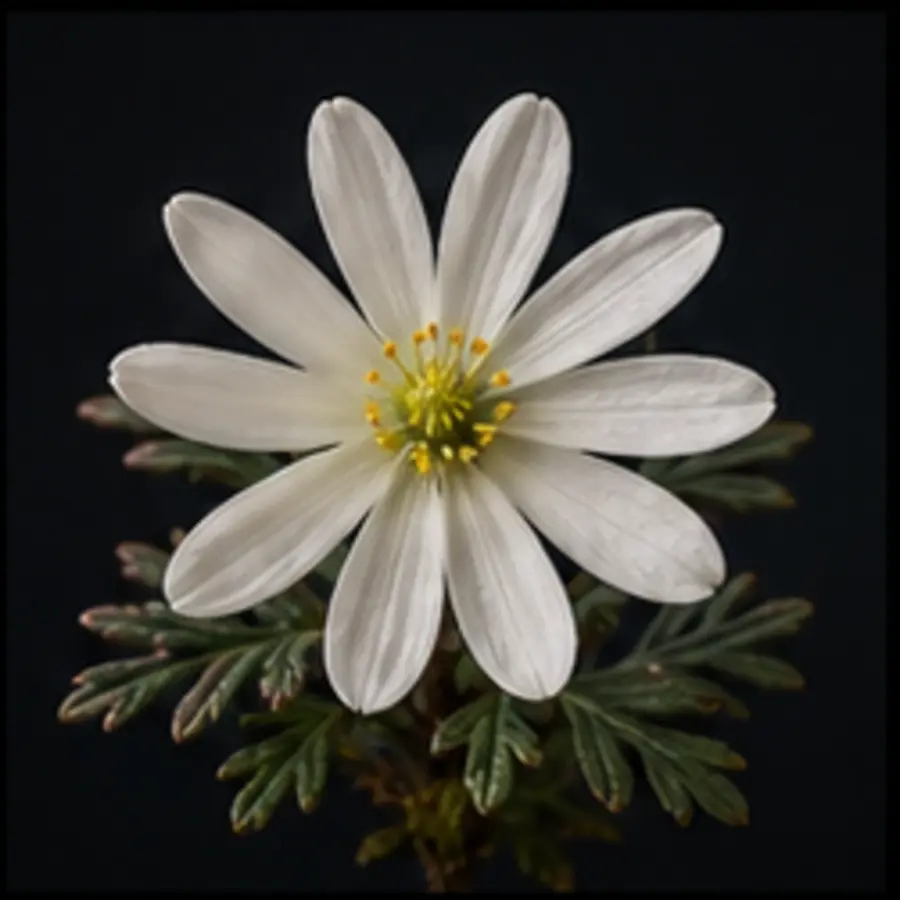
Dryas octopetalaWhite flowers on low creeping stems give way to silvery plumes: mountain avens changes its silhouette through summer. Its landscape is open grassland and limestone rock.
Floral
France · Austria · Switzerland · Italy · Slovenia
Dryas octopetalaDryas octopetala is a creeping dwarf shrub with small, scalloped leaves that are white and hairy underneath. Its solitary flowers usually bear eight petals. In Switzerland, it inhabits limestone scree, rocks and grassland at subalpine and alpine elevations, extending into parts of the Jura.
The Swiss flowering reference is generally June and July. Petals are followed by dry fruits with long feathery styles, initially gathered together and then spreading. The white flower and silvery tuft are successive stages of one plant, rather than different species.
Periods vary with region, altitude and yearly conditions.
Mountain avens is a botanical inspiration in this collection. Its scent interpretation is composed; neither petals nor plumes are presented as an industrially distilled ingredient.
A composition might express the open landscape through a clear floral impression, dry freshness and mineral nuances. A light base can preserve the idea of low vegetation rather than dense woodland. These facets propose an olfactory landscape, without claiming to analyse a mountain avens extract.
The transformation from flowers into feathery tufts gives this species its particular interest. It offers two images of the alpine season: sharply defined white at first, then a more airy texture as the fruits develop.