Maison du Lac Évian-les-Bains
Cart
EN
FrançaisEnglishEspañolDeutschItalianoNederlandsالعربية简体中文Polski日本語Português (Portugal)한국어SvenskaБългарскиΕλληνικάDansk
Menu
← Back to the Herbarium

Floral

Edelweiss

Leontopodium alpinum
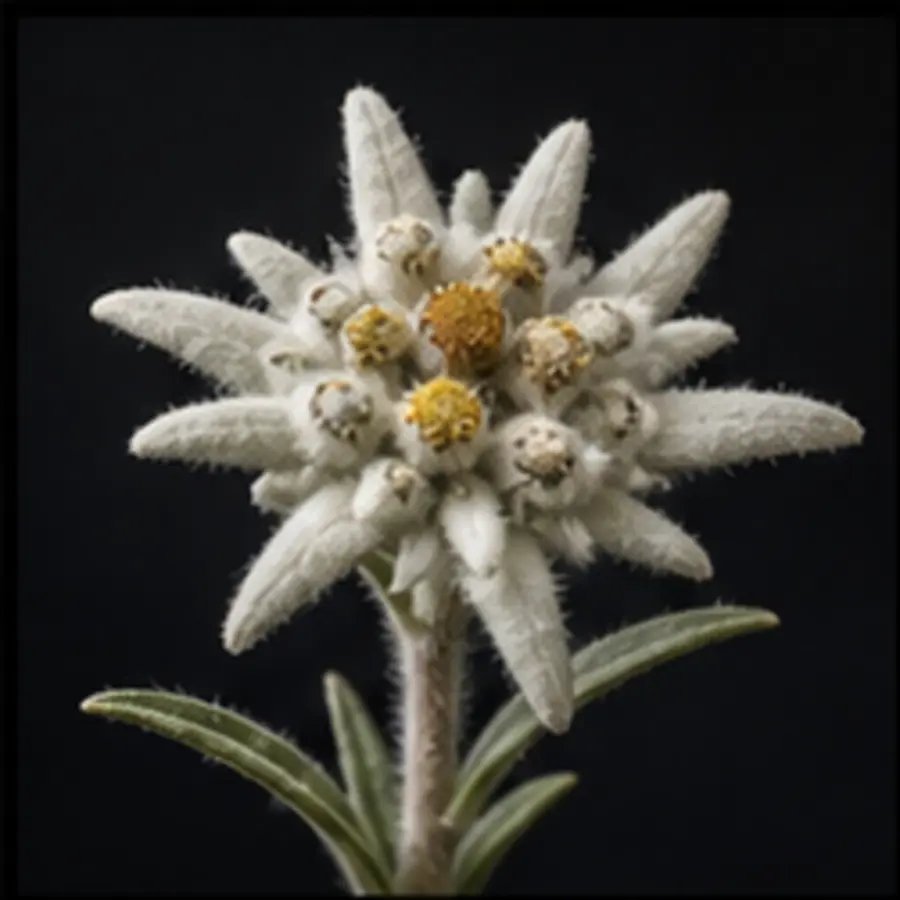
A velvet star placed on the rock: the edelweiss gives the Alpine imagination its softest light. In perfumery, this silhouette becomes an invitation to compose transparent flowers and delicate musks.
Edelweiss
01 · Botanical inspiration

Origins & territories

France · Austria · Switzerland · Italy · Slovenia

Leontopodium alpinum

Leontopodium alpinum, also called Leontopodium nivale subsp. alpinum, grows particularly in the Alps, on rocks and stony limestone grassland. The white star consists of woolly bracts: the true flowers, small and yellowish, are at the centre.

FranceAustriaSwitzerlandItalySlovenia
Alps · indicative area
02

Flowering & plant cycle

Flowering extends from July to September in the Swiss Alps. The white bracts remain visible around the tiny yellow flowers; this lasting display explains the star-like impression. Cosmetic ingredients come particularly from dedicated cultivation, with harvesting organised for extraction.

Flowering · botanical reference · Switzerland

  1. Jan
  2. Feb
  3. Mar
  4. Apr
  5. May
  6. Jun
  7. Jul · Indicative period
  8. Aug · Indicative period
  9. Sep · Indicative period
  10. Oct
  11. Nov
  12. Dec

Periods vary with region, altitude and yearly conditions.

03

Interpretation and composition

The cosmetics industry uses cultivated edelweiss extracts. Preparations are available as a dry extract on a plant-derived carrier or as an extract in sunflower oil. In perfumery, its evocation is composed as a floral, musky accord inspired by its visual softness.

04

In a composition

Edelweiss is found in ingredients intended for skin care, while its image nourishes high-altitude perfumery: white, soft and airy. An accord inspired by it can combine floral transparency, nuances of leaves and delicate musks.

05

History & uses

Leontopodium means “lion’s foot”, echoing the velvety shape of the plant. The star admired on the trails actually brings together modified leaves around small inflorescences: the spectacle comes as much from the foliage as from the flowers.