← Back to the Herbarium
Philippine elemi
Canarium luzonicumElemi lights up the resin family: a lemony, peppery opening leads towards a woody softness with an incense-like shade. It brings transparency to compositions seeking warmth without weight.
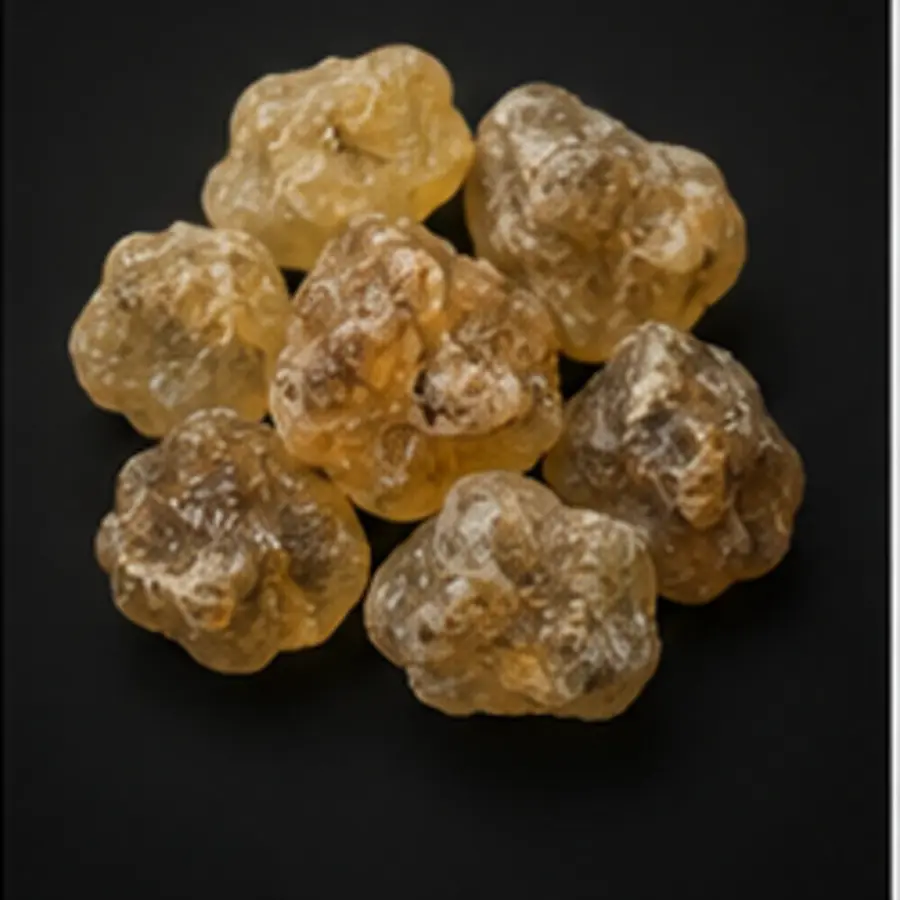
Philippines
Canarium luzonicumManila elemi comes from Canarium luzonicum, a tropical tree in the Burseraceae family. The Philippines, notably Luzon, are its emblematic commercial origin. The raw material is an oleoresin produced by the tree, rather than a peel, despite the citrus brightness perceived in its scent.
Gatherers make incisions in the bark to collect the resinous exudate. The gum is then assembled and prepared for processing. Timing varies by region and supply chain; one reference season extends from July to March. Resin freshness and storage contribute to the final profile.
Periods vary with region, altitude and yearly conditions.
Hydrodistillation of the gum-resin produces the essential oil, particularly highlighting its spicy, lemony freshness. The resin can also be processed into a resinoid or a CO₂ extract, giving different expressions of its balsamic side.
An industrial reference for the essential oil is about 5 kg of gum-resin to produce 1 kg of oil, a yield close to 20% by mass. The ratio concerns the collected gum rather than the tree’s wood.
The oil readily links a citrus opening to a woody or incense base. With pepper, it creates dry freshness; with frankincense, it lightens the resinous impression; with musks, it preserves a supple, clean brightness. This is a resin that can be imagined as light rather than smoke.
Trade made it known as Manila elemi. The resin has also been used in varnishes and ointment-like preparations. These uses tell the story of its dual nature: a material with useful physical properties and a reservoir of volatile compounds that can become perfume.