← Back to the Herbarium
Galbanum
Ferula gummosaGalbanum is a gum-resin with an intense, almost incisive green character. It gives floral accords the impression of crushed stems and living vegetation.
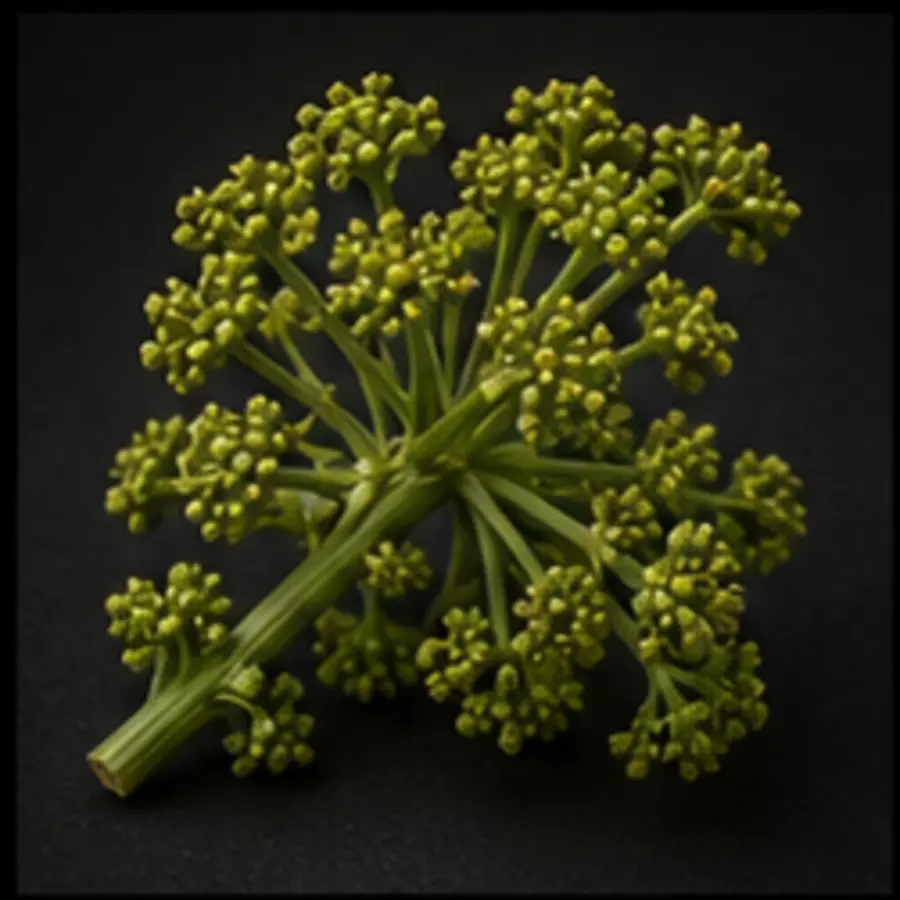
Iran
Ferula gummosaIt comes from ferulas, notably Ferula gummosa, Apiaceae plants of mountainous Iranian regions. The fragrant material is the plant’s resinous exudate rather than a leaf oil. A studied collection at Firuzkooh in northern Iran illustrates that mountain setting.
Gum-resin exudes naturally or after intervention on plant tissues, then is gathered and cleaned of impurities. One Iranian study describes June–September harvesting from sufficiently mature plants; practices vary between sites and are not simply flower picking.
Distilling the gum-resin produces a particularly vivid essential oil. Solvent extraction gives a denser resinoid retaining a different fraction of the material. The two forms have different yields and do not evolve in exactly the same way on smelling.
A studied distillation of Ferula gummosa gum-resin harvested in Iran yielded 10% essential oil: approximately 1 kg of oil from 10 kg of gum-resin. The plant concentrates this aromatic richness in its exudate.
Small touches can draw a taut green line through hyacinth, narcissus or rose accords. With orris and woods it can suggest dark, structured freshness. Its resinous facet sustains the green effect beyond the first impression.
Galbanum offers a distinctive contrast: a gum-resin expresses the scent of crushed leaves and stems. Its incisive greenness continues over a resinous base, giving floral compositions depth. An olfactive family names what the nose perceives; it does not identify the plant part used.