← Back to the Herbarium
Geranium
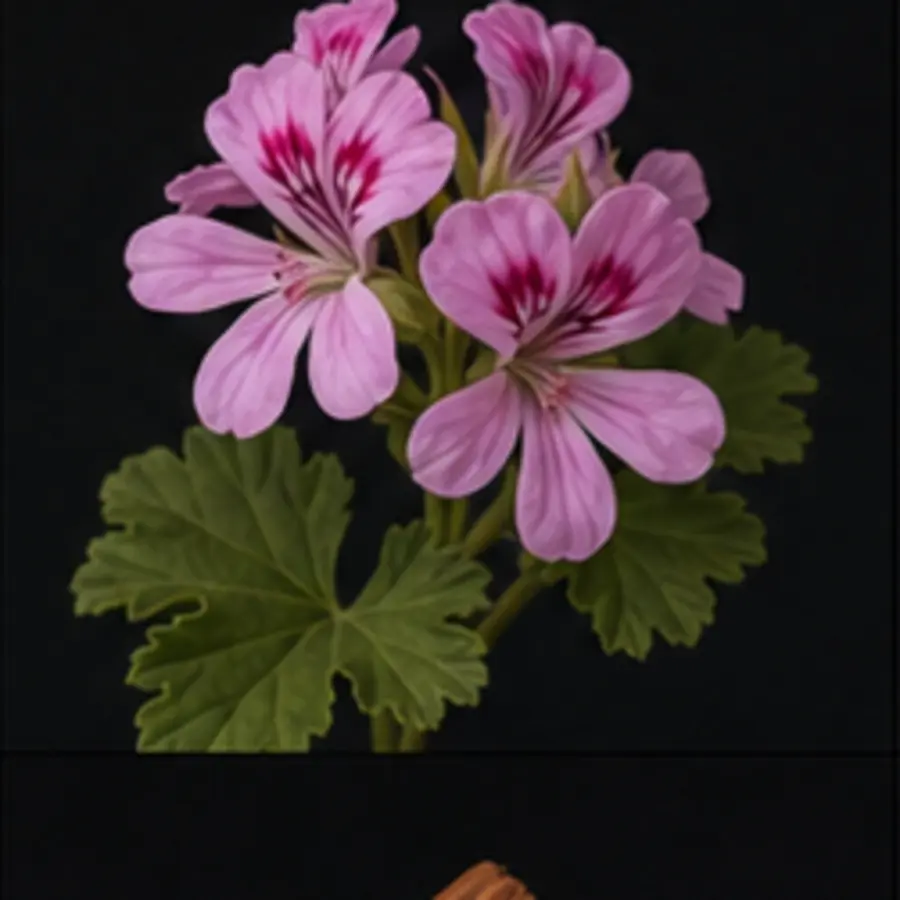
Pelargonium × hybridum / Pelargonium graveolensPerfumery geranium reveals a green, minty rose character from foliage. Its freshness and aromatic definition offer a different floral reading from rose petals.
Réunion · Madagascar · China · Egypt
Pelargonium × hybridum / Pelargonium graveolensFragrant materials come from scented pelargoniums and their hybrids, often grouped as rose geranium. Egypt, China and Madagascar have supply chains. The Egyptian grade described here is identified as Pelargonium × hybridum.
Stems and leaves are cut and taken for distillation. One Egyptian supply chain lists July and August. Cultivated hybrid, irrigation, season and cutting conditions influence the profile; a decorative balcony geranium does not define the perfumery material.
Periods vary with region, altitude and yearly conditions.
Hydrodistilling foliage produces essential oil. Citronellol and geraniol contribute rosiness, while other constituents add minty, herbal and fruity facets. Geranium absolute belongs to another process.
One documented Egyptian oil reports approximately 1,000 kg of stems and leaves per kilogram of oil, or 100 kg for 100 g.
Geranium gives rose energy and connects flowers with citrus. It accompanies fougère accords and can illuminate dry wood without losing floral presence. Its value is more than copying rose: leaf and mint accents bring their own movement.
The everyday geranium name conceals an important botanical detail: the fragrant plants exploited belong to Pelargonium. Hybrid selection helps explain differences between origins and commercial grades.