← Back to the Herbarium
Floral
Jasmine grandiflorum
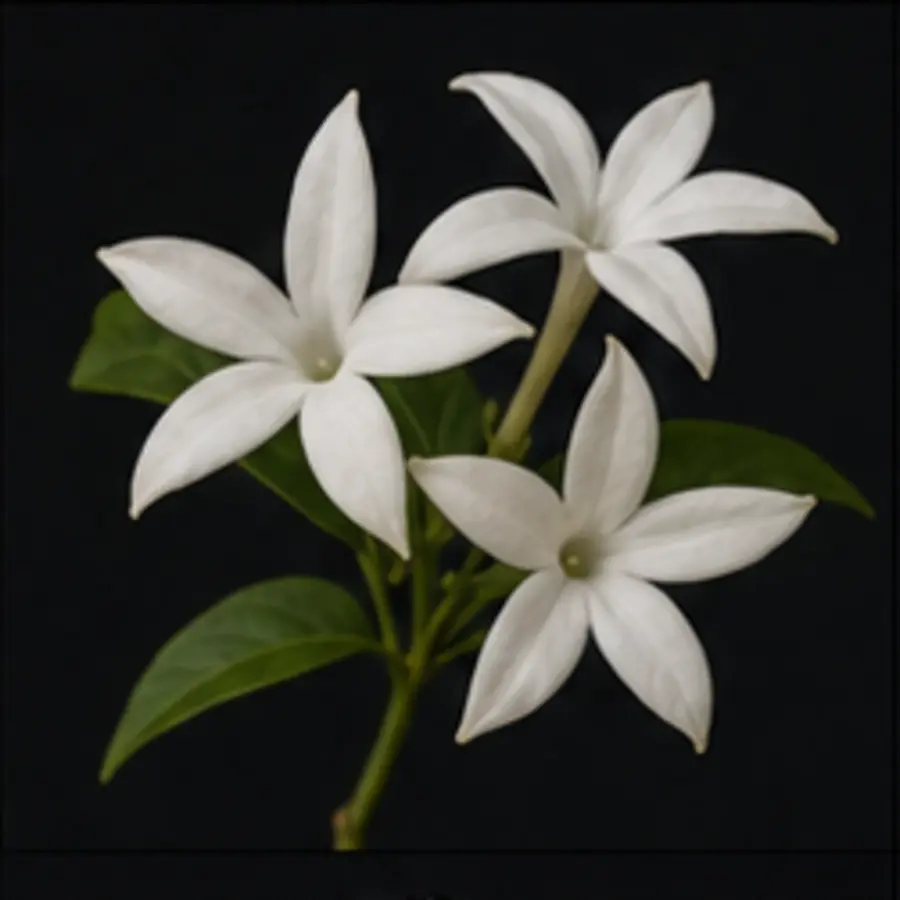
Jasminum grandiflorumBehind the white flower, jasmine grandiflorum unfolds a warm, fruity, sensuous material. Its absolute retains a depth not always suggested by the image of a delicate blossom.
Floral
France · India · Egypt
Jasminum grandiflorumJasminum grandiflorum belongs to the Oleaceae family. Grasse, Egypt and India are reference production origins. It differs from Jasminum sambac: two botanical identities with different profiles. The flower’s origin and the place where concrete becomes absolute may also differ.
Open flowers are hand-picked early in the day. In Grasse, the campaign runs through summer and autumn. One Indian supply chain specifies June to November and extracts the flowers as soon as they reach the factory in late morning. Short handling times contribute to quality. A single supply chain’s calendar must not be extended to all jasmines worldwide.
Periods vary with region, altitude and yearly conditions.
The flowers undergo solvent extraction to produce a concrete. Alcohol treatment and wax separation then yield the absolute. Some supply chains perform the first stage near the fields and the second in Grasse. The absolute is not a distilled essential oil; the successive stages help explain its richness and value.
One reference Indian absolute reports about 800 kg of flowers per 1 kg of absolute, or about 80 kg of flowers per 100 g.
Jasmine grandiflorum can combine a green opening, fruity nuances, a spicy dimension and warm, sometimes indolic depth. Indolic describes a scent facet that may seem animalic at high intensity. It gives rose or orange-blossom bouquets volume and adds substance to solar compositions, beyond a simple white-flower note.
Jasmine flowers also have a life before extraction, notably in Indian garlands and fragrant ornaments. Their delicate handling reminds us that an absolute begins with successive picking and transport operations, long before factory processing.