← Back to the Herbarium
Floral
Jasmine sambac
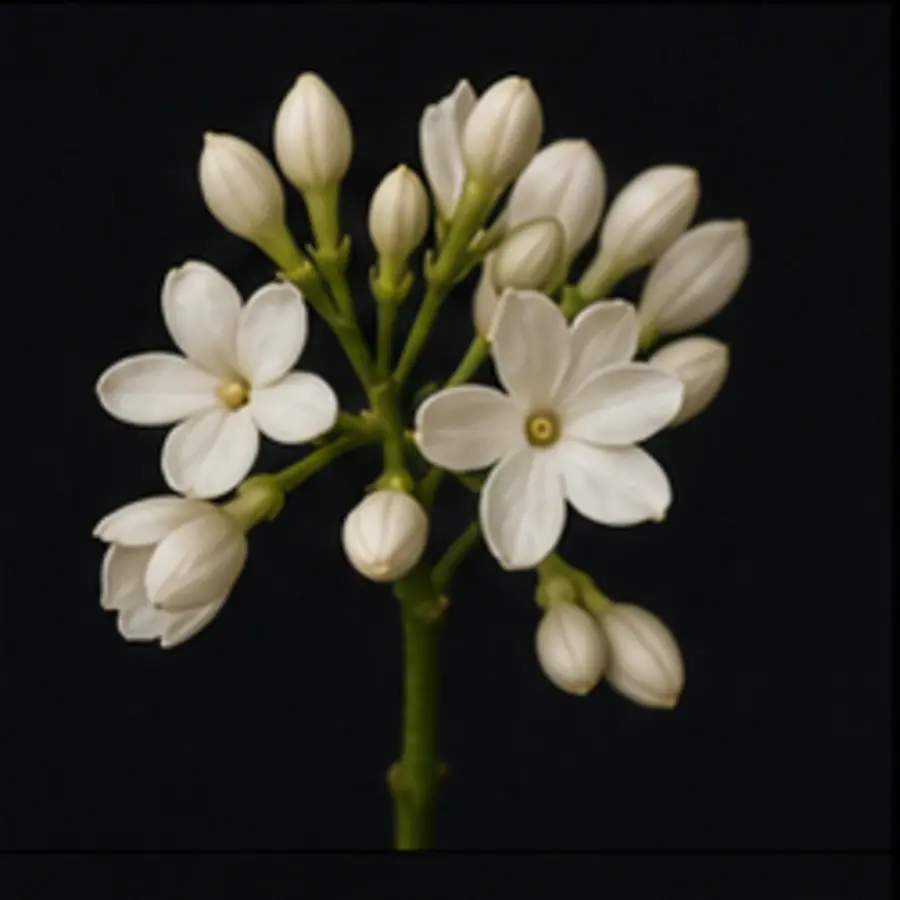
Jasminum sambacJasmine sambac gives a rich, radiant white flower crossed by green, fruity and orange-blossom nuances. It has its own identity alongside jasmine grandiflorum.
Floral
India
Jasminum sambacJasminum sambac is an Oleaceae plant cultivated notably in India. Flowers for perfumery enter a different supply chain from garlands and fresh-flower sales, even where harvesting practices coexist.
Picking is manual and flower stage is selected for the intended destination. Their fragility requires swift organization between harvest and extraction. One documented Indian absolute lists March–October; this calendar must not replace jasmine grandiflorum’s.
Periods vary with region, altitude and yearly conditions.
Solvent extraction produces a concrete, then ethyl-alcohol purification yields the absolute. Indole and methyl anthranilate are among the constituents contributing its personality. The extract does not exactly reproduce the air around a fresh blossom.
One Indian sambac absolute reports approximately 1,200 kg of flowers per kilogram of extract, or 120 kg for 100 g.
Sambac gives bouquets volume and solar accords sensuous light. Its greenness can give vanilla sweetness or ylang roundness tension. Indolic describes a sometimes animalic facet at high intensity, integrated within a much broader floral material.
Two jasmines may share a white-flower image while remaining distinct materials. Botanical name, calendar and processing explain differences between sambac and grandiflorum beyond a simple question of strength.