← Back to the Herbarium
Myrrh
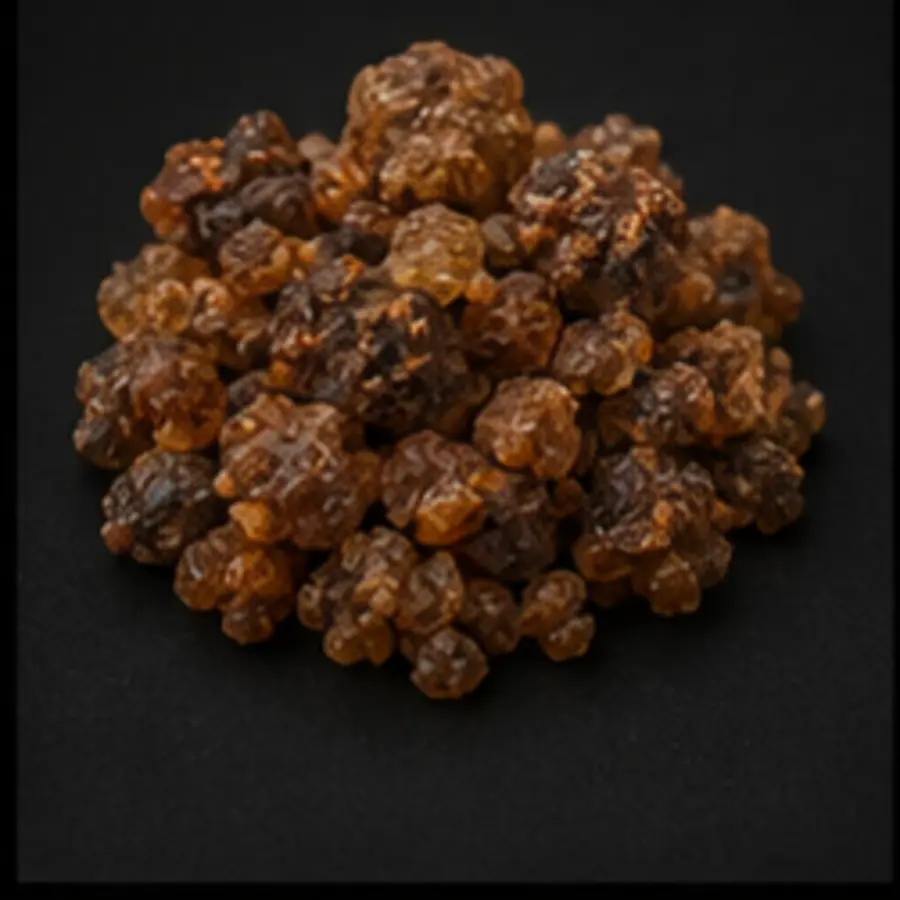
Commiphora myrrhaMyrrh offers warm, bitter, slightly liquorice-like resin. Its scent combines balsamic depth with drier aromatic accents.
Somalia · Ethiopia
Commiphora myrrhaCommiphora myrrha is a Burseraceae tree adapted to dry regions of the Horn of Africa, notably Somalia and Ethiopia. It yields a gum-resin distinct from Boswellia frankincense, despite their frequently linked historical uses.
The exudate hardens in air into resinous fragments that are collected and sorted. Gum cleanliness and provenance influence processing. One East African grade lists December–May; this reference describes a supply chain rather than every Commiphora species.
Hydrodistilling the gum-resin produces essential oil. Extraction yields heavier resinoids with different texture and behaviour. The two forms represent complementary resin fractions with varying proportions of fragrant compounds.
One organic East African Commiphora myrrha oil reports approximately 15 kg of gum-resin per kilogram of oil, or 1.5 kg for 100 g.
Myrrh gives ambers a warmth less vanilla-like than benzoin. It can introduce a liquorice shadow into woods and a resinous nuance into leather accords. With frankincense it creates a dialogue between terpenic freshness and darker depth.
The myrrh name accompanies a long tradition of aromatic resins. In perfumery it remains useful to distinguish it from opoponax, sometimes called sweet myrrh: similar names do not guarantee identical species or profiles.