02The harvest season
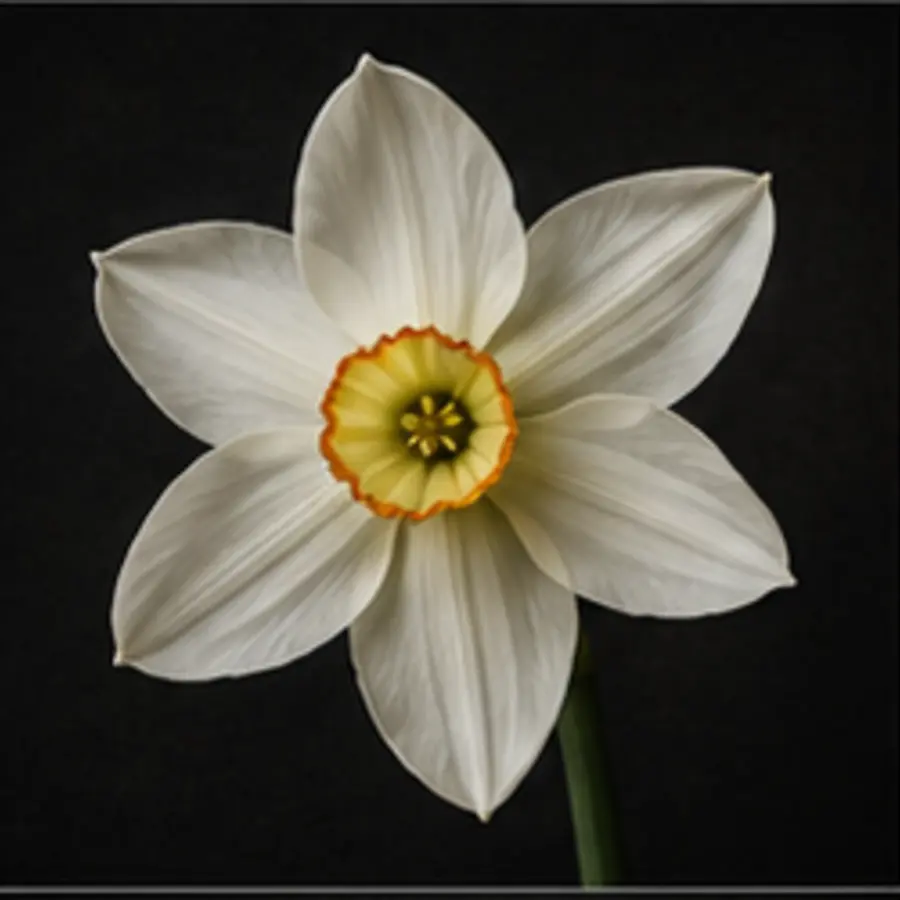
The crop is concentrated in May and June, with timing influenced by altitude and spring weather. Flowers are collected during their brief full bloom and taken promptly for extraction. That proximity matters: a fresh flower continues to change after cutting, so the journey is part of the quality of the harvested bouquet.
Harvest · regional reference · France
- Jan
- Feb
- Mar
- Apr
- May · Indicative period
- Jun · Indicative period
- Jul
- Aug
- Sep
- Oct
- Nov
- Dec
Periods vary with region, altitude and yearly conditions.
04In a composition
Narcissus enriches floral compositions, chypres and hay accords. Its green opening keeps the honey from becoming overly sweet, while a tobacco facet extends woods and leathers. With rose, it suggests a living garden rather than a polished bouquet. With iris, it can acquire a powdery, slightly dry elegance.
05History & uses
Its appeal lies in a contrast: the flower’s luminous appearance conceals a rich, almost rustic material. Lozère supply chains bring together meadow owners, gatherers and extractors. The story of perfumery narcissus is therefore also that of an agricultural landscape and the preservation of a highly seasonal harvest.