← Back to the Herbarium
Aromatic
Petitgrain
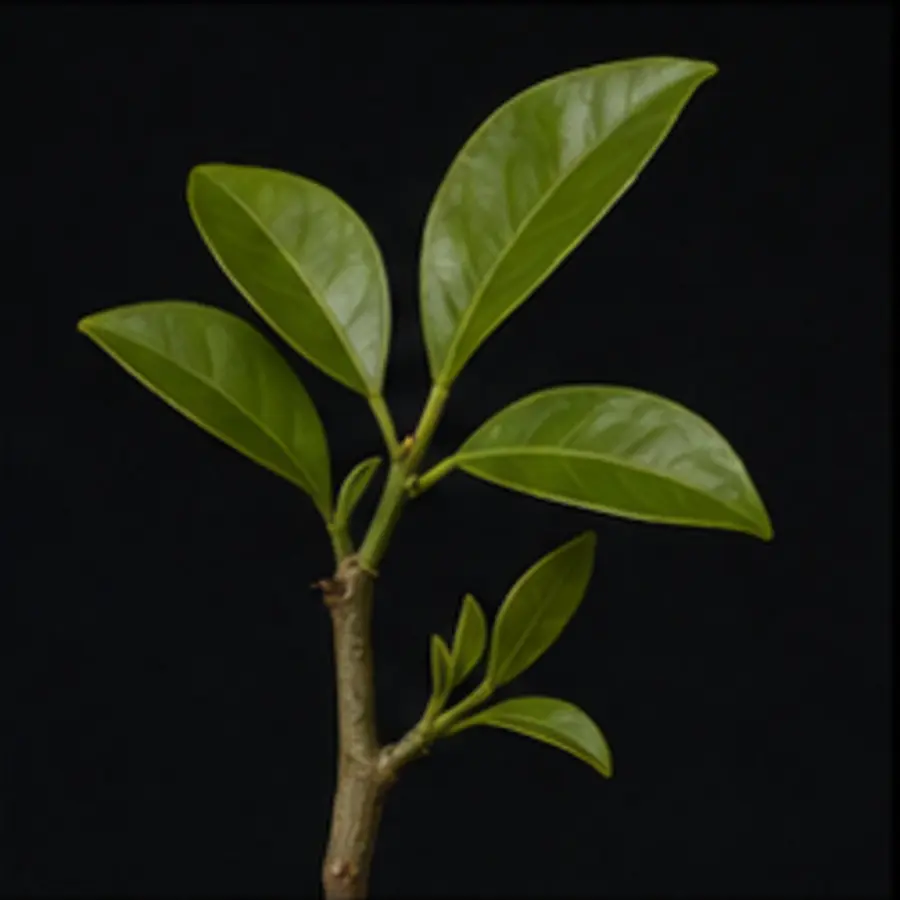
Citrus aurantiumPetitgrain expresses bitter orange’s leafy side: green, aromatic and floral. It connects citrus freshness to orange-blossom softness through a twig-like structure.
Aromatic
Paraguay
Citrus aurantiumCitrus aurantium var. amara is cultivated in Paraguay specifically for leaves and stems. San Pedro is a reference production region, often involving small growers who carry out their own distillation.
Leafy twigs are cut by hand or with pruning shears. Campaigns vary between supply chains: one Paraguayan producer lists October–March, while others cover more of the year. Pruning cycles and farm needs also influence collection.
Periods vary with region, altitude and yearly conditions.
Steam distillation of leaves and twigs produces essential oil. It differs from expressed peel oil and blossom-distilled neroli. Linalool and linalyl acetate contribute its olfactive bridge between foliage and flowers.
One Paraguayan supply chain reports approximately 0.3% oil, or nearly 33 kg of leaves for 100 g.
Petitgrain structures Cologne and gives neroli a more vegetal freshness. It accompanies lavender, bergamot and pale woods, creating a fresh heart rather than merely a lemon-like opening. Its twig nuance can also give an overly rounded floral bouquet tension.
The name comes from small green fruits historically associated with production. It remained in use mainly for leaf-and-twig oil: the name’s history therefore cannot describe a present-day batch’s distillation charge.