Maison du Lac Évian-les-Bains
Cart
EN
FrançaisEnglishEspañolDeutschItalianoNederlandsالعربية简体中文Polski日本語Português (Portugal)한국어SvenskaБългарскиΕλληνικάDansk
Menu
← Back to the Herbarium

Dwarf mountain pine

Pinus mugo subsp. mugo
A low pine clinging to the slopes, dark needles and a clear resinous freshness: the Dwarf mountain pine gives the perfume a mountain energy. Its signature evokes a crumpled twig rather than the softness of polished wood.
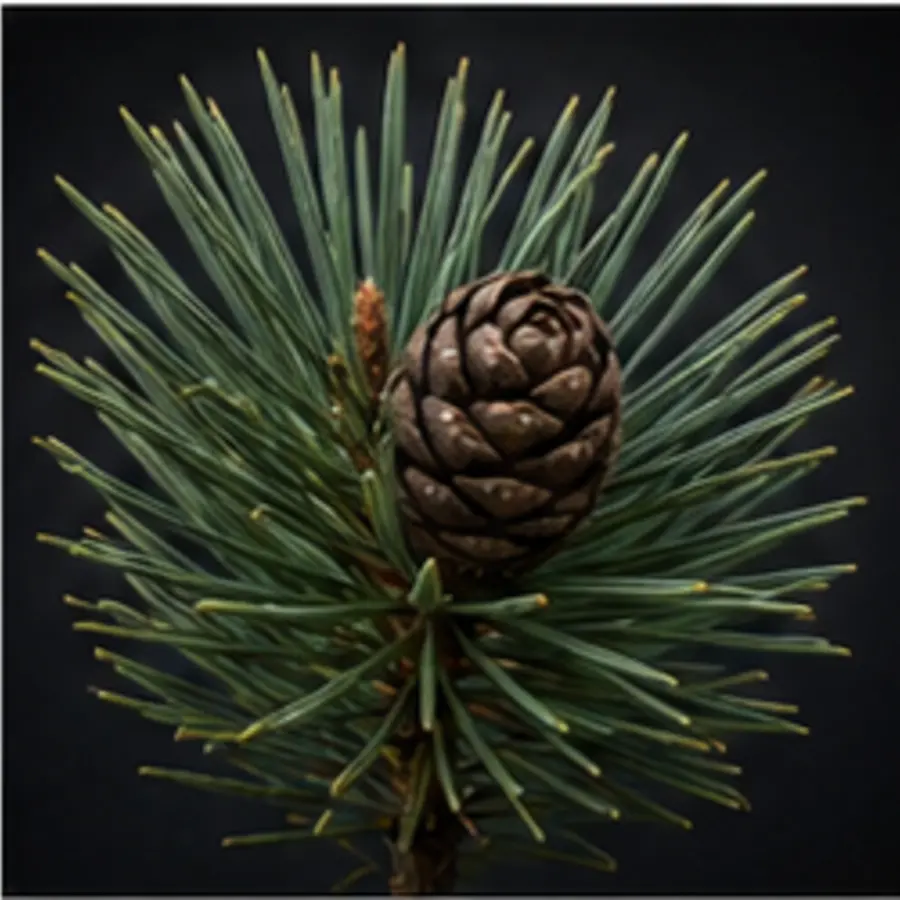
Dwarf mountain pine
01 · Natural material

Origins & territories

France · Austria · Switzerland · Italy · Slovenia

Pinus mugo subsp. mugo

Pinus mugo subsp. mugo is a conifer with a bushy habit and branches that lie low before ascending. Its needles grow in pairs; small cones accompany dense vegetation adapted to mountainous terrain. It belongs to the complex group of mountain pines.

FranceAustriaSwitzerlandItalySlovenia
Alps · indicative area
02

Flowering & plant cycle

The leafy branches intended for distillation are cut and then prepared for the still. The work period depends on the sector and the local vegetation rhythm. The persistent needles constitute the aromatic resource, with the young woody parts which bear them.

Flowering · botanical reference · Switzerland

  1. Jan
  2. Feb
  3. Mar
  4. Apr
  5. May
  6. Jun · Indicative period
  7. Jul · Indicative period
  8. Aug
  9. Sep
  10. Oct
  11. Nov
  12. Dec

Periods vary with region, altitude and yearly conditions.

03

From material to extract

The leafy branches are steam distilled to provide an essential oil. The steam carries away the volatile compounds, then the condensation isolates the oil. The choice of branches and the conduct of the process determine the freshness of this aromatic material.

04

In a composition

Dwarf mountain pine can reinforce an aromatic fougère, an evocation of forest or a dry woody structure. Its resinous clarity dialogues with bitter citrus fruits and herbs; a soft base helps to round out the relief.

05

History & uses

Its bushy habit contrasts with the image of the large single-trunked pine. The branches follow the slopes and form low thickets: this shape becomes a landscape clue as useful as the smell in understanding the identity of the tree.