← Back to the Herbarium
Scots pine
Pinus sylvestrisScots pine brings a bright, resinous forest freshness. Needle oil reveals a different side of the conifer from materials obtained from its wood or resin.
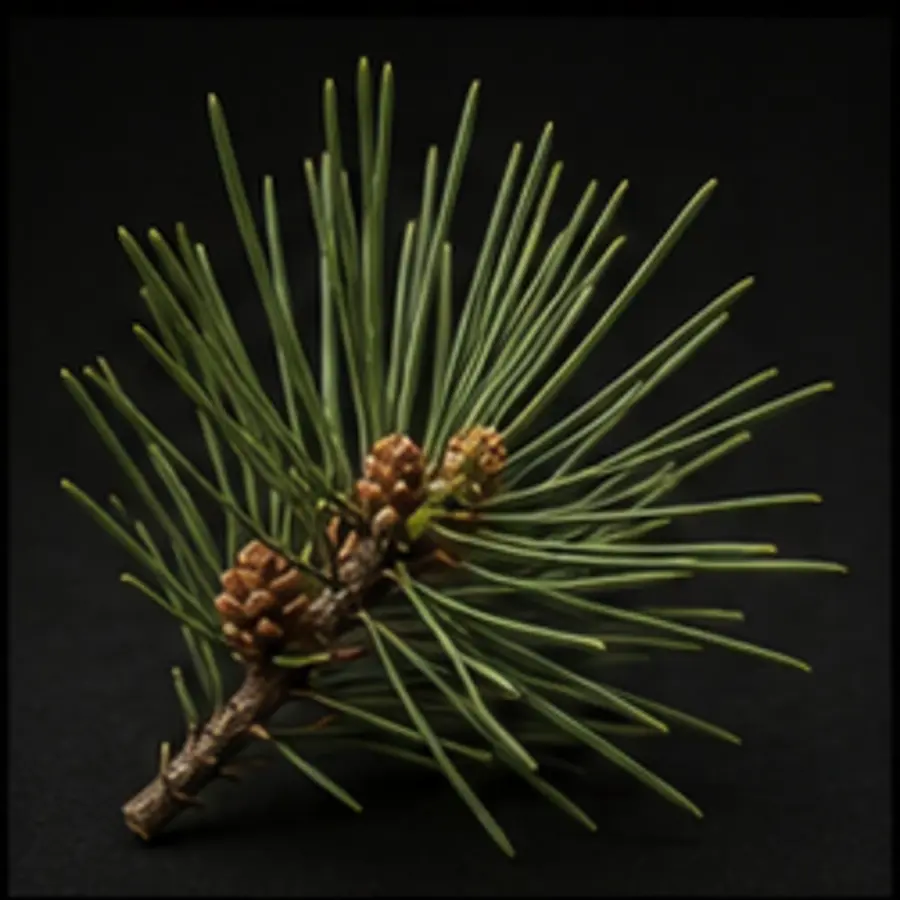
France · Sweden · Finland
Pinus sylvestrisPinus sylvestris ranges widely across Europe and Asia. France and northern European regions are reference supply areas for fragrant materials. A French oil may come from wild-harvested needles; origin and distilled plant part describe it more precisely than “pine” alone.
Needles are collected with twigs according to the distiller’s working practices. One distillery harvesting in the Alps above Lake Garda describes winter collection followed by distillation on arrival. This local practice does not define a universal season: altitude, forestry management and the condition of the biomass all matter.
Steam distillation carries volatile needle compounds into a condensate that separates into an aqueous phase and essential oil. This process differs from producing turpentine from resinous materials.
Pine opens a composition with a cool, dry, balsamic effect. With juniper and citrus it sketches an airy landscape; with cedarwood and vetiver it leads towards a denser woody base. A direct terpenic facet belongs to its identity.
At a distillery working with pines from the Alps above Lake Garda, twigs are gathered in winter and distilled on arrival. A distillation lasting around two and a half hours reveals the needles’ fresh, balsamic side, carrying the forest landscape into the fragrant material.