← Back to the Herbarium
The Epic
Kashmir saffron
Crocus sativusSaffron unfolds as dry spicy warmth, with leathery shadows and sometimes an almost metallic glint. It adds character without necessarily suggesting pastry.
The Epic
India
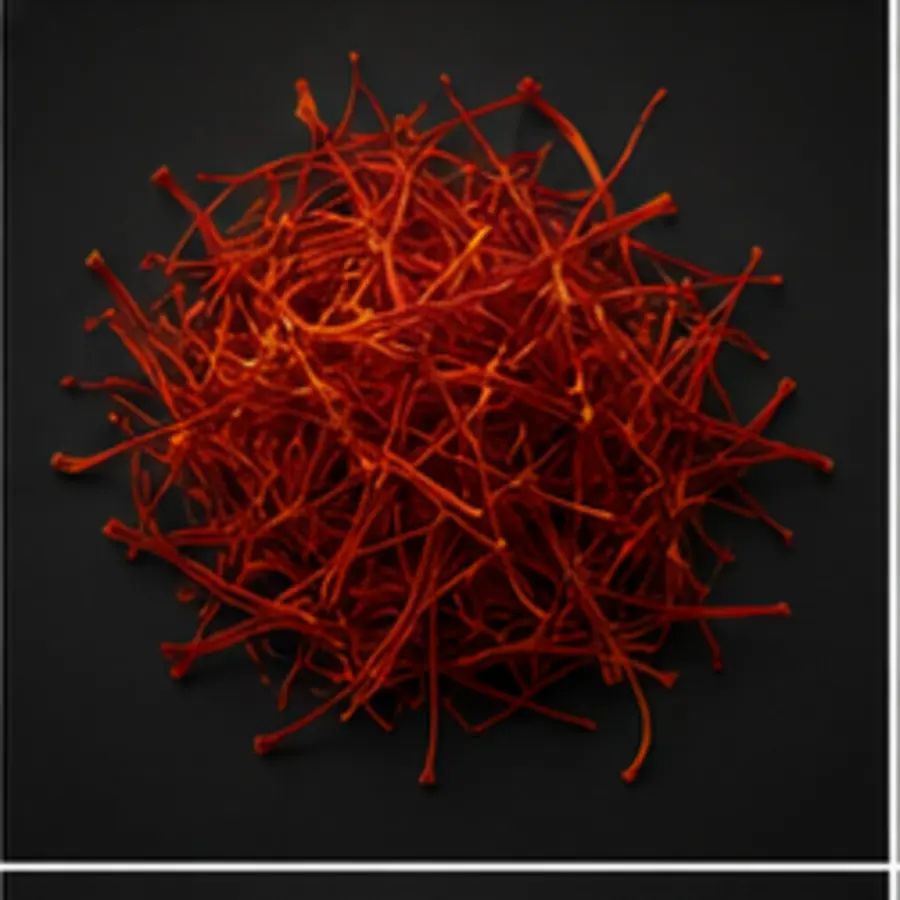
Crocus sativusThe material comes from the stigmas of Crocus sativus, an iris-family plant. Indian Kashmir, particularly around Pampore, is a renowned origin. Saffron crocus differs from spring-flowering Alpine crocuses.
The autumn flowering window is short. Kashmir agronomic calendars place flower emergence in October and November. Flowers are handpicked, then red stigmas are separated and dried: only a small part of each flower is retained.
Periods vary with region, altitude and yearly conditions.
Natural extracts exist, including a Kashmir saffron oleoresin offered at 5% in a carrier. That figure describes a commercial preparation, not an agricultural yield. A saffron accord composed with aroma molecules is a different construction.
Studies indicate roughly 110,000–165,000 flowers for 1 kg of dried saffron. This measures the work behind dried spice, not flowers required for a kilogram of essential oil.
Saffron can accompany rose, patchouli, woods and oud impressions. Its leathery side draws a dry depth; a small touch may create tension between softness and austerity.
Food colour and smell tell different stories. Safranal contributes to the aromatic signature: the perfumer seeks an olfactory sensation rather than only the spice’s red image.