← Back to the Herbarium
Floral
Alpine snowbell
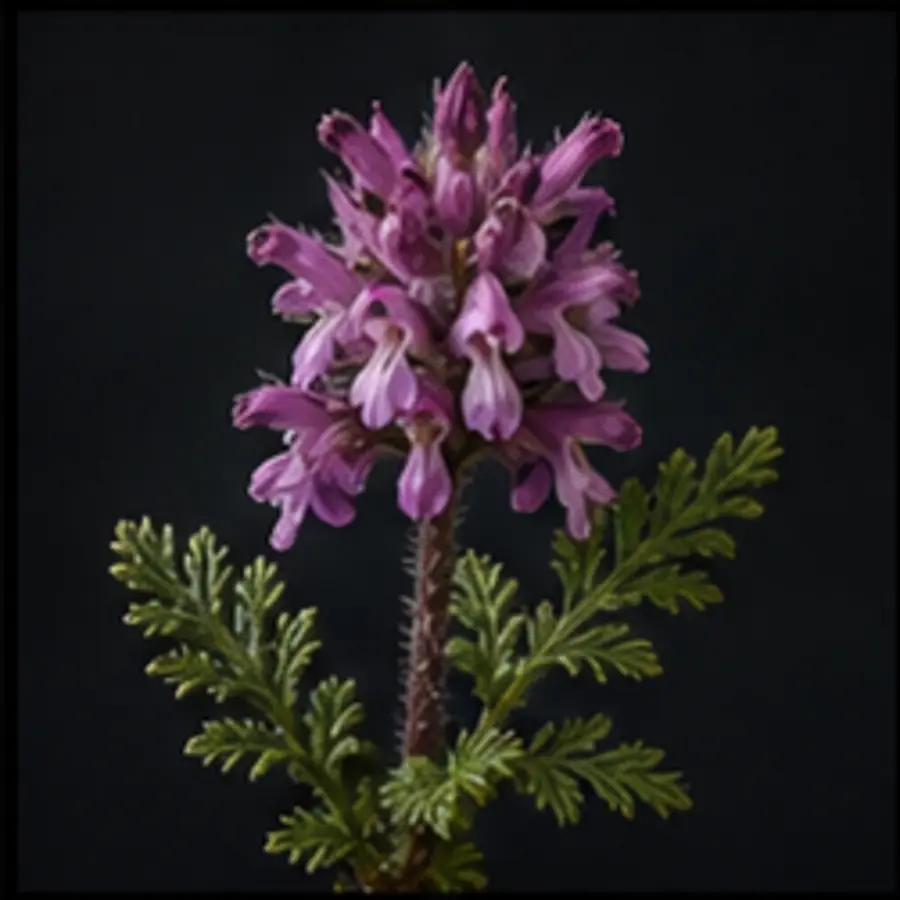
Soldanella alpinaSmall violet bells with finely divided edges accompany the retreat of snow. Alpine snowbell evokes a cool, damp, luminous mountain landscape.
Floral
France · Austria · Switzerland · Italy · Slovenia
Soldanella alpinaSoldanella alpina belongs to the Primulaceae family. Rounded, sometimes kidney-shaped leaves gather at the base, while a few bells rise on a leafless stalk. The corolla is cut into narrow strips: these form the fringe, rather than hanging stamens. In Switzerland it inhabits damp grassland and snowbeds in the Alps, Prealps and parts of the Jura.
The Swiss flowering reference is generally May to July. Snowmelt is decisive, releasing different sites at different times. Capsules develop above the foliage afterwards. This is a flowering calendar, without a customary commercial harvest for perfumery.
Periods vary with region, altitude and yearly conditions.
Snowbell is a landscape inspiration. Its fragrant evocation is composed as an accord, rather than obtained as a conventional essential oil from its bells.
A perfumer might suggest damp ground through a restrained earthy note, then clear air through green, watery freshness. A transparent floral impression can connect the two. This is a sensory interpretation of the surroundings, rather than an analytical reproduction of the plant’s scent.
Its silhouette brings together low, rounded, leathery foliage and delicately fringed hanging flowers. That contrast explains its evocative presence in landscapes at the beginning of the alpine season.