← Back to the Herbarium
Floral
Ylang-ylang
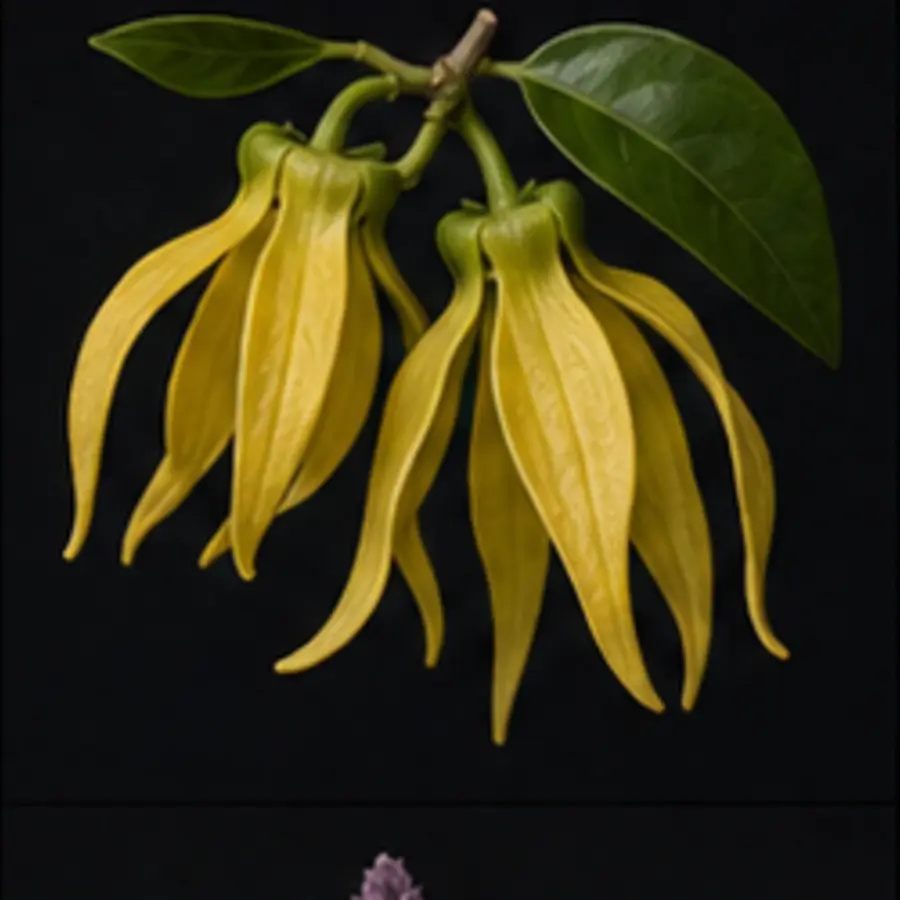
Cananga odorataYlang-ylang offers a full, creamy, spicy flower with fruity nuances. Its oil comes in distillation fractions giving several expressions of the same blossom.
Floral
Comoros · Madagascar
Cananga odorataCananga odorata is a tropical Annonaceae tree. Madagascar and the Comoros archipelago are reference origins. Its long-petalled flowers turn yellow when mature and supply the fresh material for the still.
Mature flowers are hand-picked and promptly distilled. In tropical production areas, flowering can support repeated collection; volumes and the most favourable periods depend on site. Extended availability does not imply an identical profile throughout the year.
Water or steam distillation is fractionated: successive collected portions produce grades including Extra, I, II and III. Early and late fractions have different constituent distributions. Complete oil and an Extra fraction must therefore be identified separately.
Ylang gives jasmine and tuberose bouquets volume, rounds woods and warms musks. Its facets may suggest solar flowers, ripe fruit and gentle spice. The balance between floral opening and depth changes with the fraction.
Different distillation cuts give the flower several lives. Extra and I grades are particularly used in fine fragrance, while II and III are more associated with functional perfumery. One harvest can therefore offer balances suited to very different creations.